How Tokyo’s Neighborhoods Differ: A Guide to Tokyo’s Neighborhoods
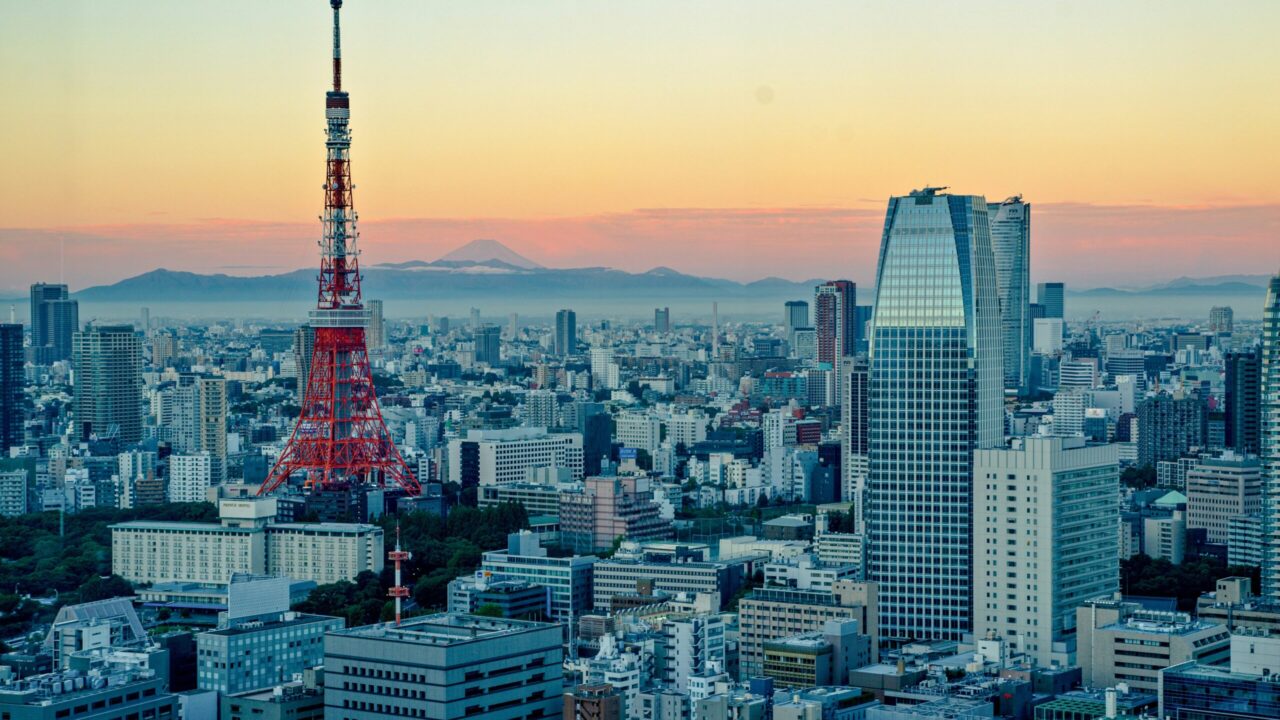
Discover the Personality of Tokyo, One Neighborhood at a Time
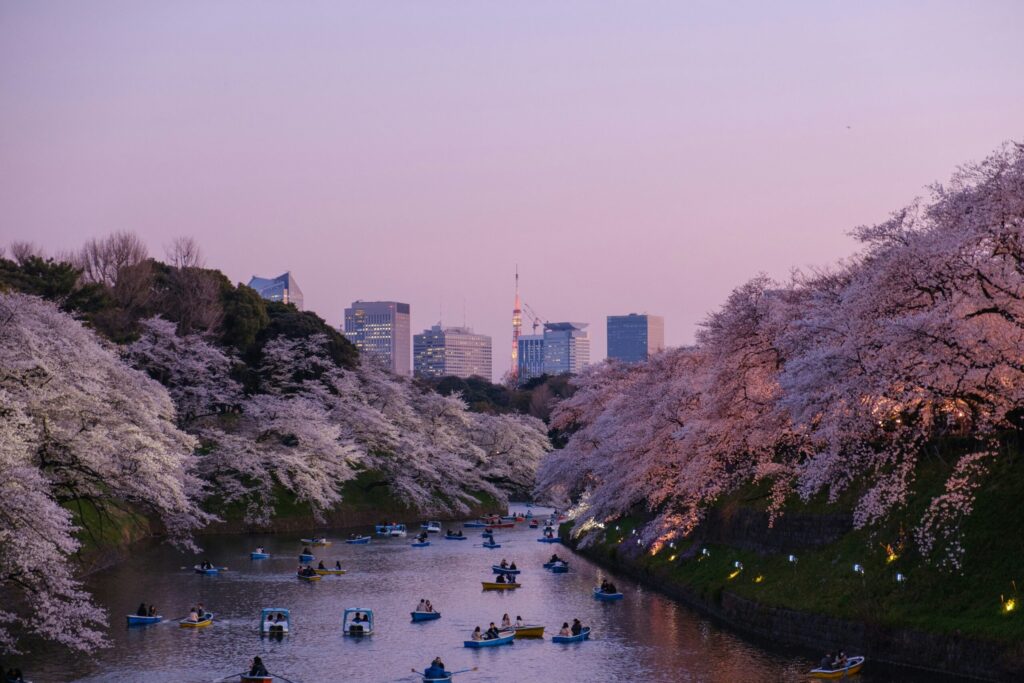
Most visitors to Tokyo have heard of places like Shibuya, Shinjuku, Harajuku, or Ikebukuro. These famous neighborhoods appear in almost every guidebook and travel website, making them familiar even before a trip begins.
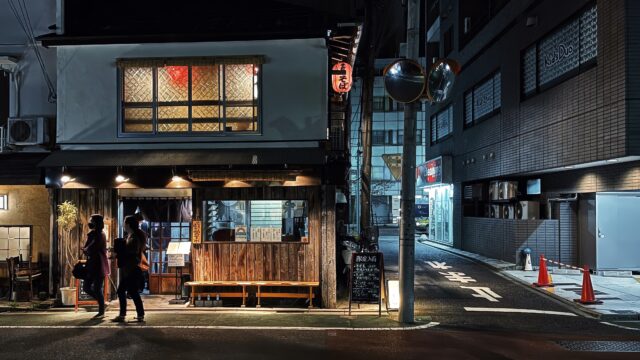
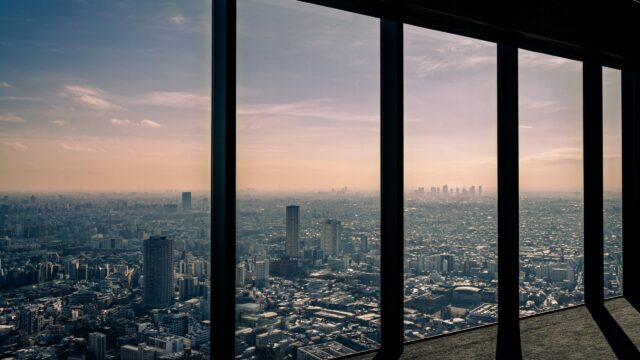
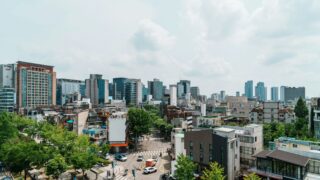
But Tokyo is much more than its best-known districts. Neighborhoods such as Kichijoji, Koenji, Kuramae, Kiyosumi-Shirakawa, and Jiyugaoka are well known among Tokyo residents, yet many international visitors know little about them. Each has its own atmosphere, history, and character, and choosing one over another can completely change your experience of the city.
This guide introduces both Tokyo’s iconic neighborhoods and the lesser-known areas that locals love. Rather than focusing on sightseeing attractions, it explores the personality of each neighborhood—how it feels, what makes it unique, and how it differs from other parts of Tokyo.
To make the guide easier to navigate, the neighborhoods are grouped into three broad areas: Central Tokyo, West of the Yamanote Line, and East of the Yamanote Line. While these categories are based on geography, the real purpose of this guide is to help you understand the unique character of each neighborhood.
Whether you’re deciding where to stay, planning your itinerary, or simply curious about Tokyo beyond the famous tourist spots, this guide will help you discover the neighborhoods that best match your interests and travel style.
Explore Tokyo by Neighborhood
📍 Central Tokyo ( Neighborhoods on and inside the Yamanote Line )
Tokyo Station / Marunouchi – The Gateway to Modern Tokyo
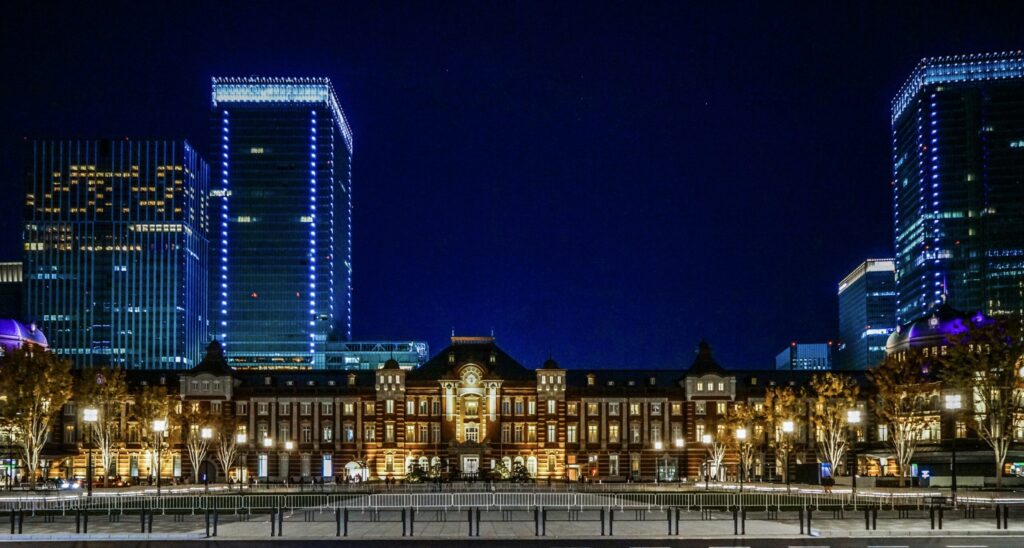
Tokyo Station and Marunouchi form the city’s main transportation and business hub. Historic red-brick architecture stands alongside modern skyscrapers, luxury hotels, and office buildings, creating a district that blends Tokyo’s past with its future. Despite being one of the busiest parts of the city, the wide streets and open spaces give the area a surprisingly calm atmosphere.
Many visitors simply pass through Tokyo Station, but Marunouchi is well worth exploring on foot. Elegant cafés, high-quality restaurants, beautifully restored historic buildings, and modern public spaces make it one of Tokyo’s most sophisticated districts. It is an excellent place to begin a trip and to experience Tokyo’s polished, business-oriented side.
Known for:
🚄 Transportation • 🏛 Architecture • ☕ Cafés • ✨ Luxury • 🚶 Walking
Ginza – Tokyo’s Home of Luxury and Refinement
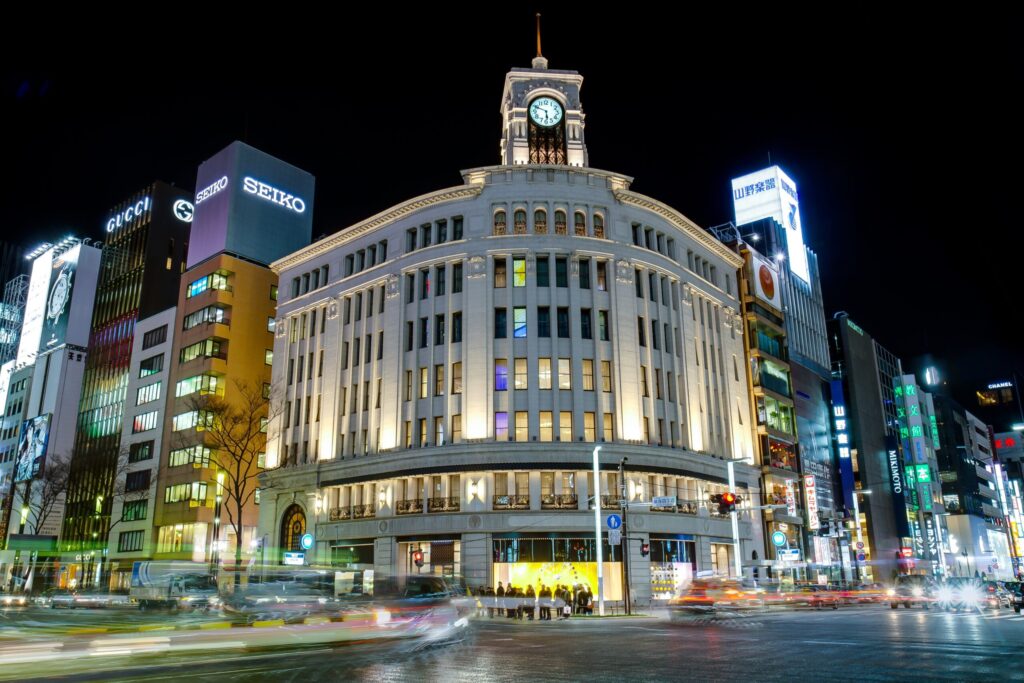
Ginza has long been regarded as Tokyo’s most prestigious shopping district. Luxury fashion houses, historic department stores, art galleries, traditional confectionery shops, and renowned restaurants have shaped its reputation for more than a century. Rather than following the latest trends, Ginza is known for timeless quality, craftsmanship, and exceptional service.
Even if shopping isn’t your priority, Ginza is one of Tokyo’s most enjoyable neighborhoods to explore. Wide boulevards, elegant architecture, and beautifully designed storefronts create a relaxed atmosphere that feels noticeably different from busier commercial areas like Shibuya or Shinjuku.
Known for:
🛍 Shopping • ✨ Luxury • 🍽 Dining • 🏛 Architecture • 🚶 Walking
Shinjuku – Tokyo at Its Biggest and Busiest
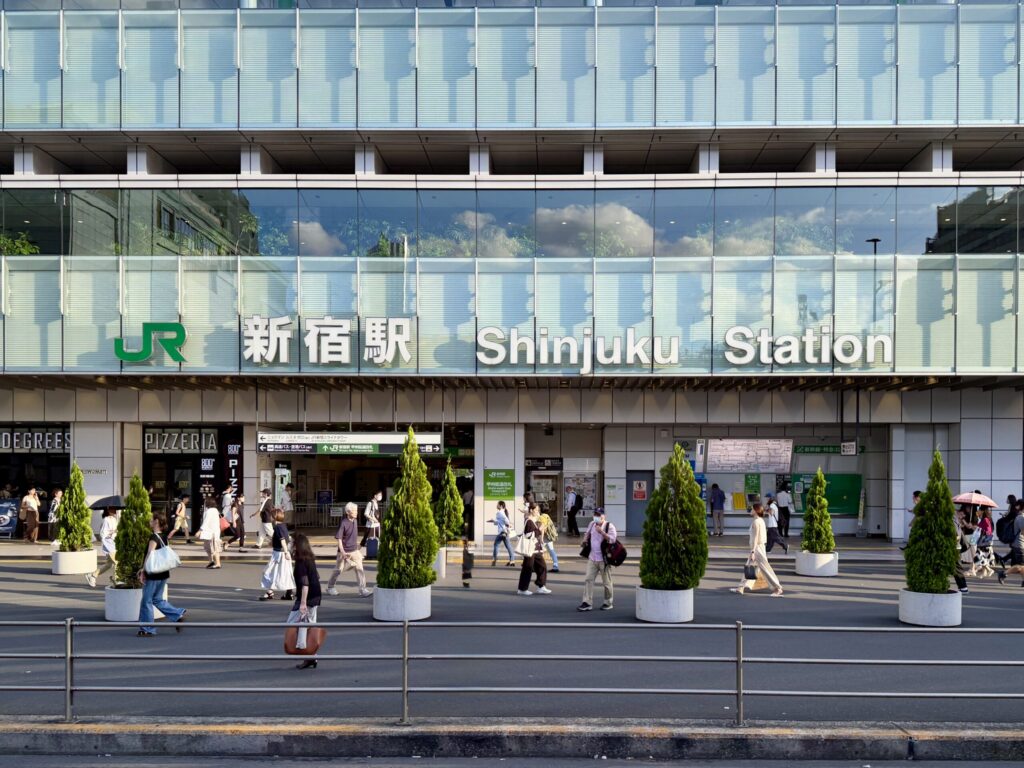
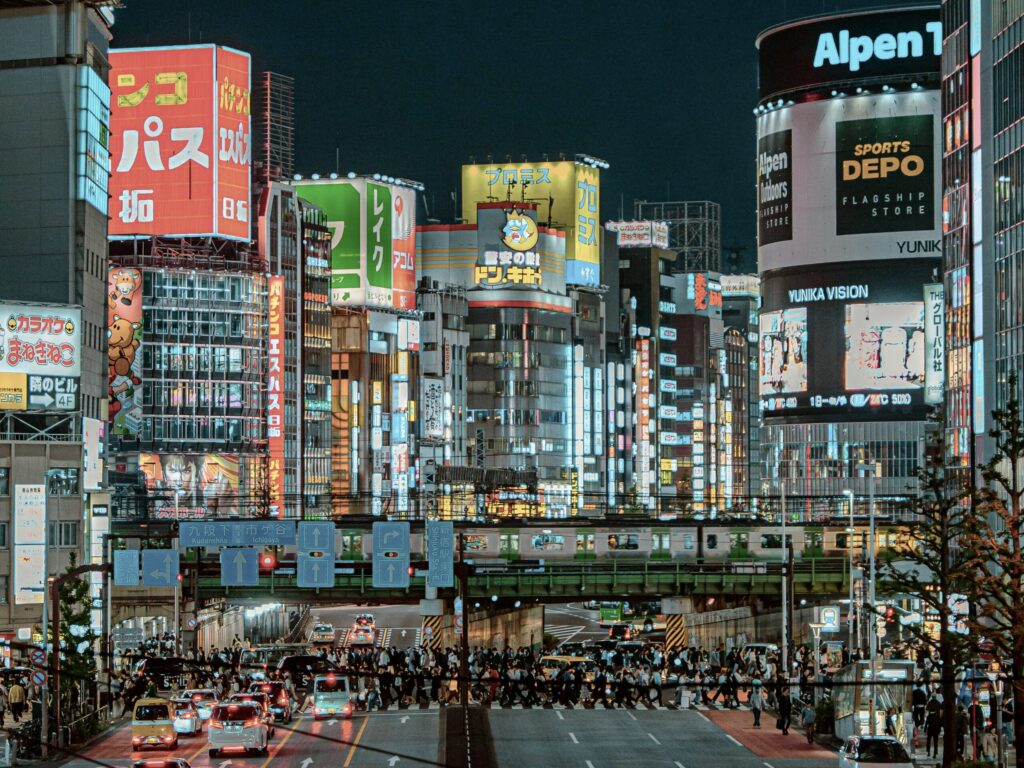
Shinjuku is where many visitors first experience Tokyo at full speed. Business districts, department stores, entertainment areas, hotels, restaurants, and residential streets all come together around one of the world’s busiest railway stations. The neighborhood is constantly busy, yet each part of Shinjuku has its own distinct character.
The western side is dominated by skyscrapers and office towers, while the eastern side is famous for shopping, dining, and nightlife. A short walk can also lead to quiet residential streets or the green space of Shinjuku Gyoen. Few places represent the scale, diversity, and energy of Tokyo as clearly as Shinjuku.
Known for:
🏙 City Life • 🛍 Shopping • 🍜 Dining • 🌃 Nightlife • 🚆 Transportation
Shibuya – Fashion, Trends, and Urban Energy
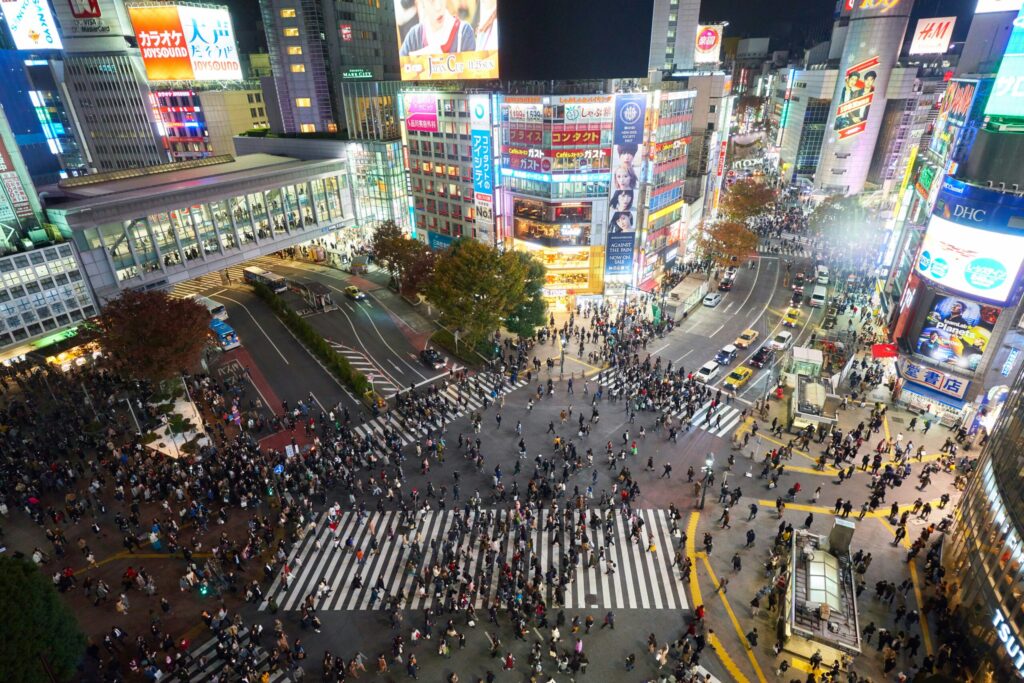
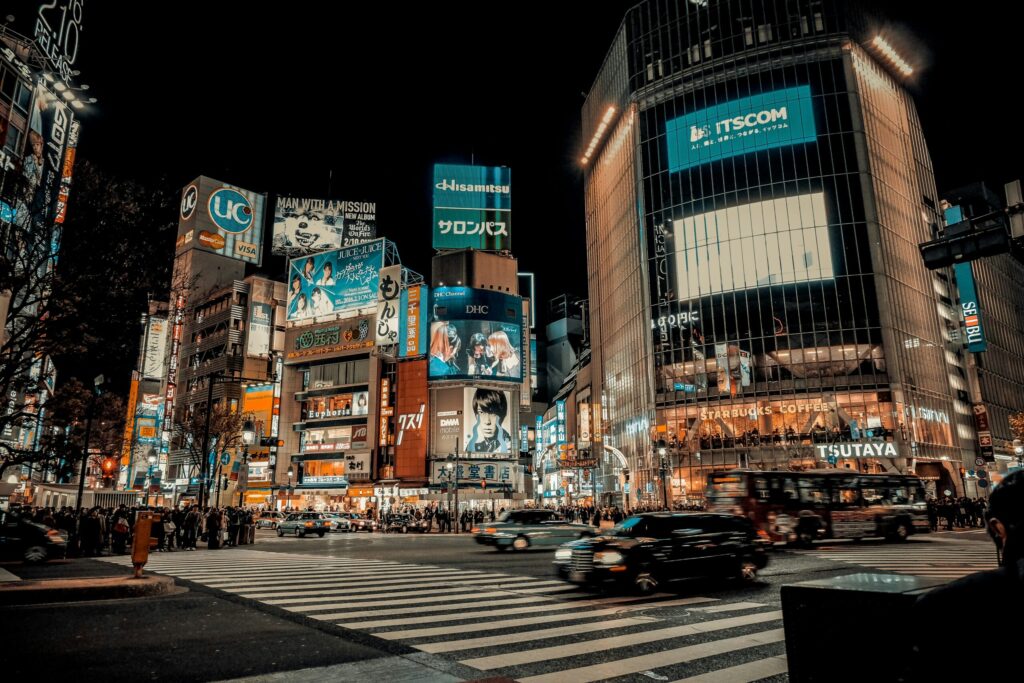
Shibuya is one of the world’s best-known symbols of modern Tokyo. It is the city’s center of youth culture, fashion, entertainment, and constantly changing trends. Around the station, enormous shopping complexes stand beside smaller streets filled with cafés, boutiques, music venues, and bars.
Although many people visit only to see Shibuya Crossing, the neighborhood offers much more than its famous intersection. Every area has a slightly different atmosphere, making Shibuya a place where shopping, creativity, business, and everyday life naturally come together.
Known for:
👗 Fashion • 🛍 Shopping • ☕ Cafés • 🌃 Nightlife • 📷 Photography
Harajuku – Creative Fashion and Youth Culture
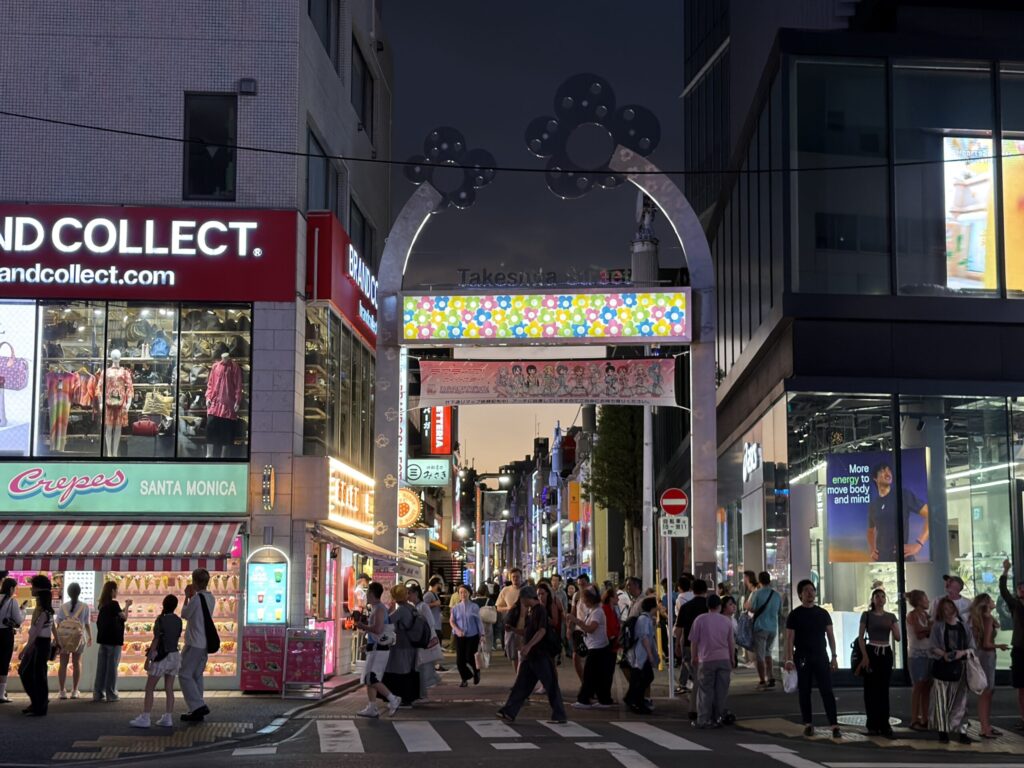
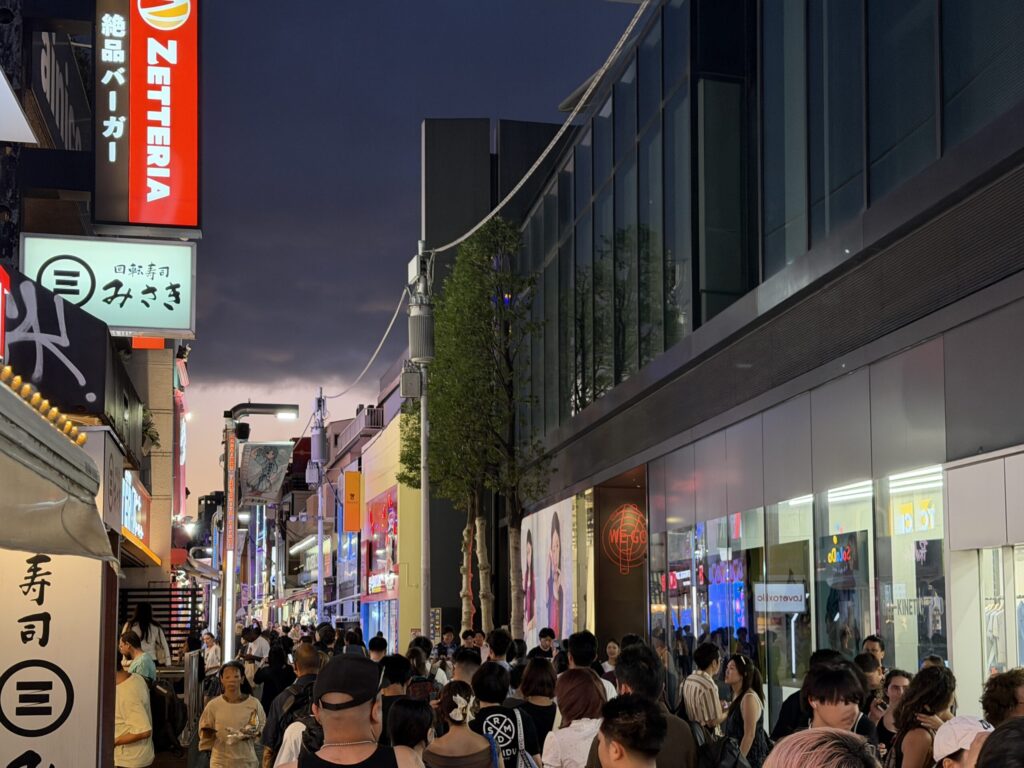
Harajuku has become synonymous with creativity and self-expression. While Takeshita Street is famous for colorful fashion, desserts, and street food, the surrounding backstreets have a completely different atmosphere, with independent boutiques, stylish cafés, galleries, and small lifestyle shops.
One of Harajuku’s unique characteristics is how quickly the scenery changes. Within just a few minutes’ walk, busy shopping streets give way to the peaceful forests of Meiji Jingu and the open spaces of Yoyogi Park, creating one of Tokyo’s most interesting contrasts.
Known for:
👗 Fashion • ☕ Cafés • 🛍 Shopping • 🌳 Parks • 📷 Photography
Omotesando – Sophisticated Shopping and Modern Design
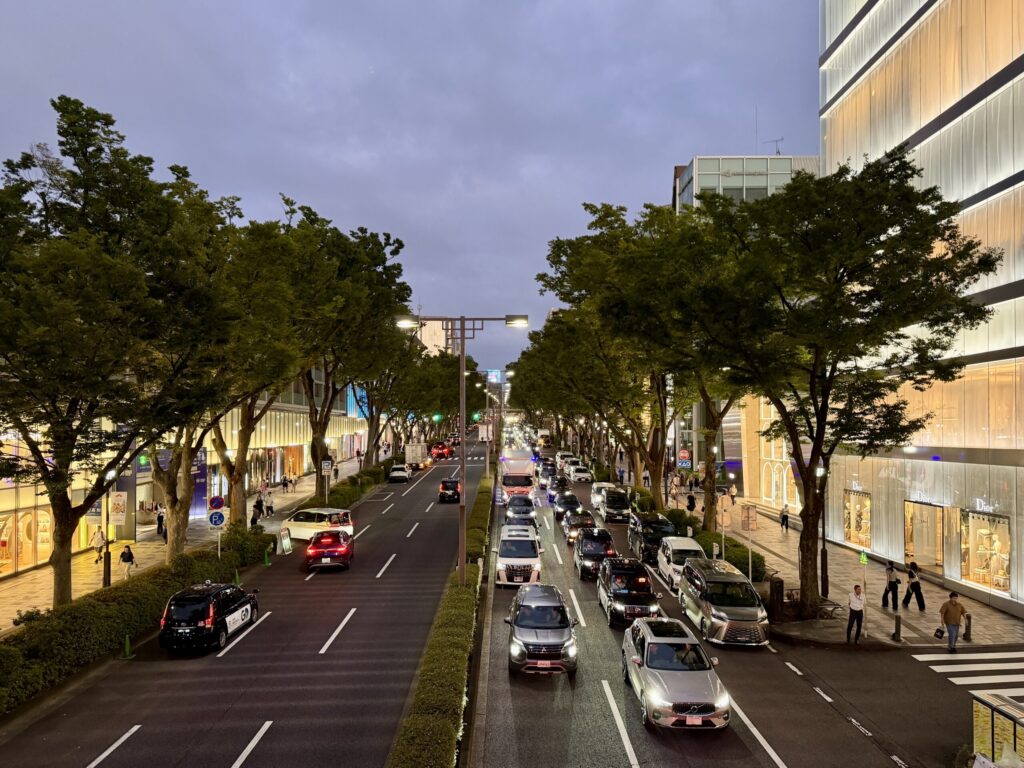
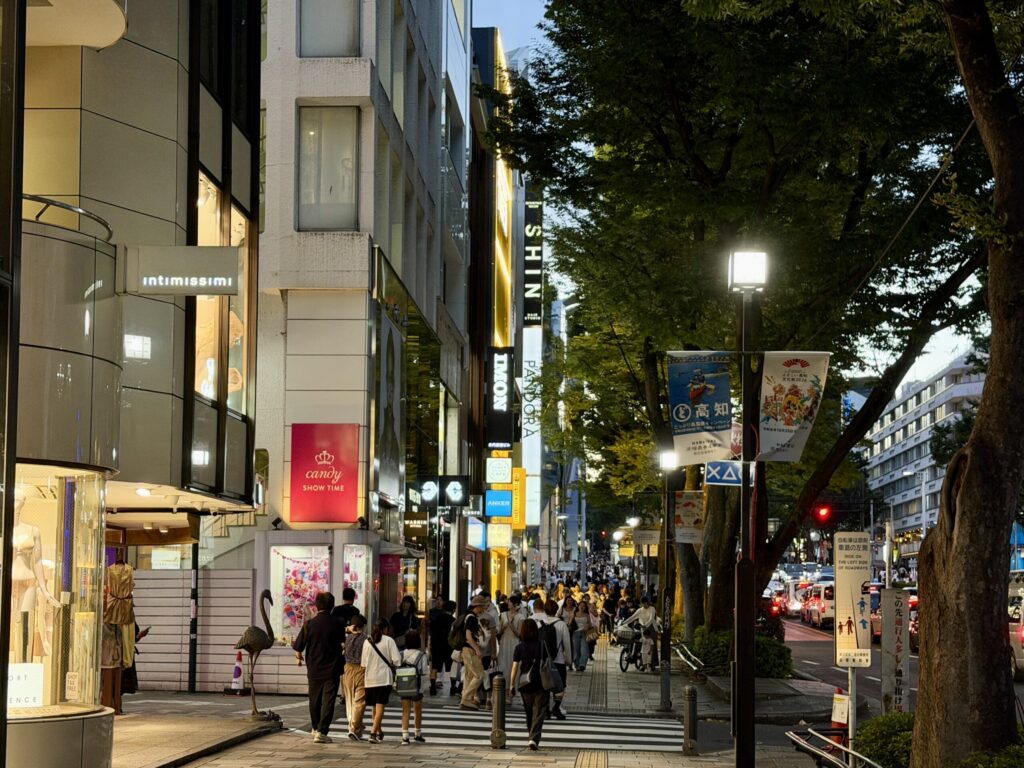
Often described as Tokyo’s most elegant shopping street, Omotesando is known for its tree-lined boulevard, flagship stores, contemporary architecture, and stylish cafés. The atmosphere is quieter and more refined than nearby Harajuku, attracting visitors who appreciate design, fashion, and architecture.
Although luxury brands are prominent, Omotesando is just as enjoyable for a relaxed walk. Beautiful buildings, spacious sidewalks, and inviting cafés create an atmosphere that feels both international and distinctly Tokyo.
Known for:
☕ Cafés • 🛍 Shopping • 🏛 Architecture • ✨ Luxury • 🚶 Walking
Ueno – Culture, Parks, and Everyday Tokyo
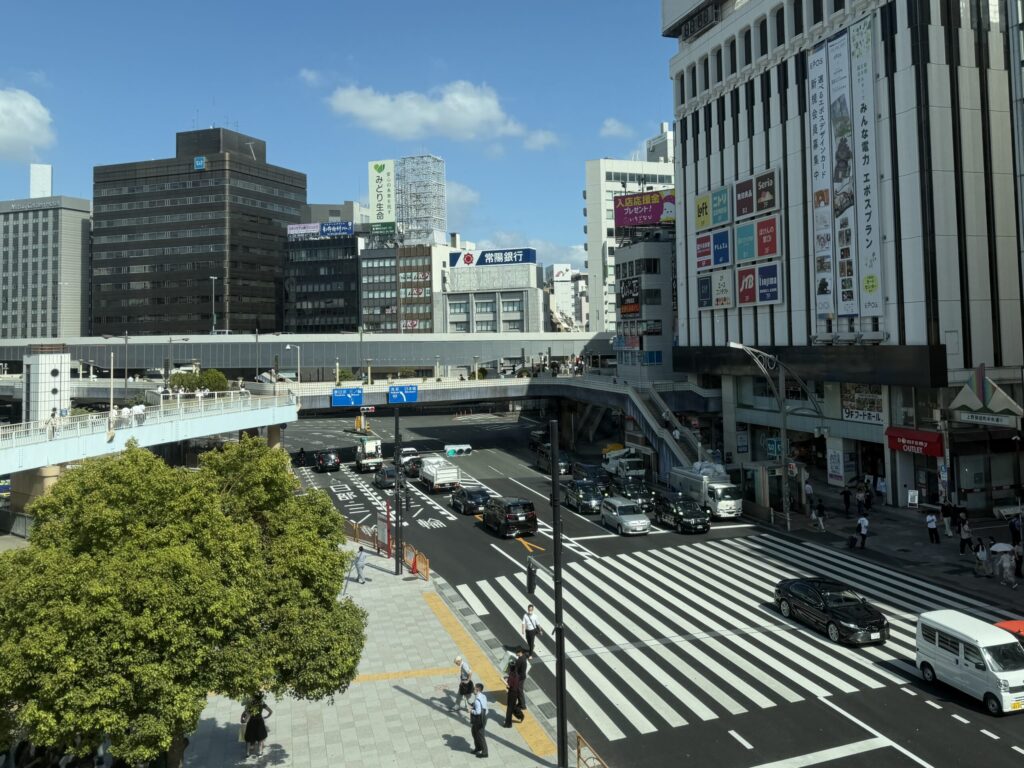
Ueno is one of the best places to experience a different side of Tokyo, where culture, history, nature, and everyday life all come together. At the heart of the neighborhood is Ueno Park, home to several of Japan’s leading museums, galleries, and cultural institutions. Just outside the park, lively shopping streets, traditional restaurants, and the famous Ameyoko Market create a completely different atmosphere.
Unlike neighborhoods that focus mainly on shopping or nightlife, Ueno feels more balanced and local. Families, students, commuters, tourists, and long-time residents all share the same spaces, giving the area an authentic sense of everyday Tokyo. It is a neighborhood that rewards both first-time visitors and those looking to explore beyond the city’s modern image.
Known for:
🏛 Museums • 🌳 Parks • 🍜 Dining • 🛍 Shopping • 🏘 Local Atmosphere
Akihabara – The Center of Anime and Pop Culture
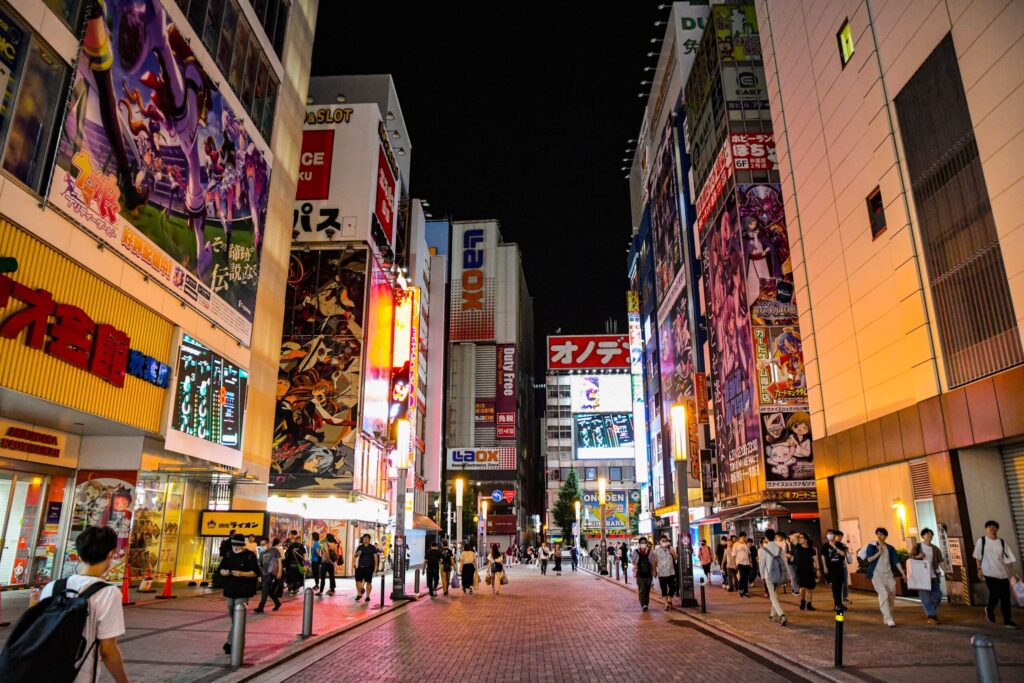
Akihabara is internationally famous as the home of Japanese electronics, anime, manga, gaming, and pop culture. What began as an electronics district has evolved into one of Tokyo’s most distinctive neighborhoods, attracting visitors with a wide variety of specialty stores, themed cafés, arcades, and hobby shops.
Even if you’re not an anime fan, Akihabara is fascinating simply because nowhere else in Tokyo feels quite the same. Every street has its own niche, from retro video games and collectible figures to the latest technology. It is a neighborhood with a strong identity that continues to evolve while remaining true to its unique culture.
Known for:
🎮 Pop Culture • 🎌 Anime • 📱 Electronics • 🛍 Shopping • 🎲 Gaming
Ikebukuro – Shopping, Entertainment, and Everyday City Life
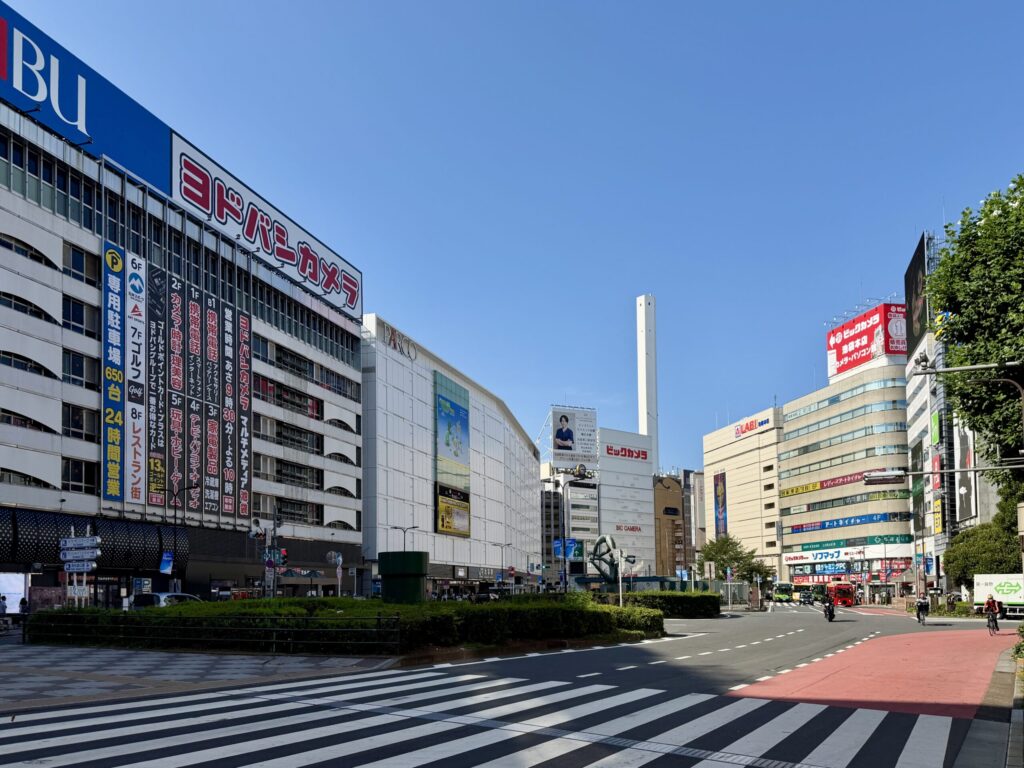
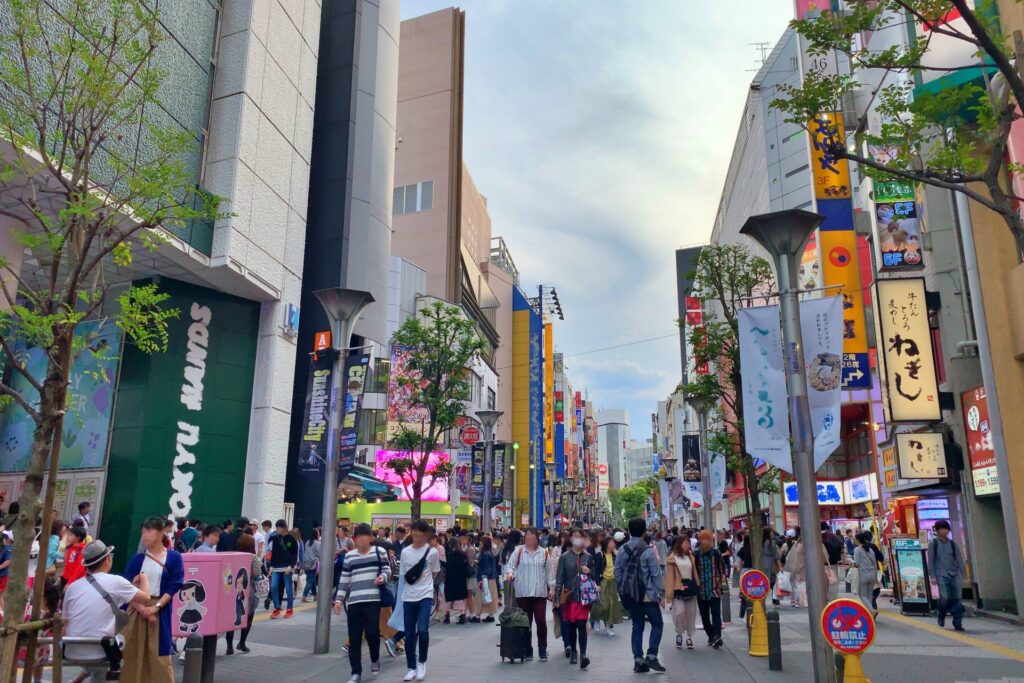
Ikebukuro is one of Tokyo’s major commercial centers, yet it often feels less tourist-oriented than Shinjuku or Shibuya. Around the station, department stores, shopping malls, cinemas, restaurants, and entertainment complexes attract a wide range of visitors, while quieter residential streets begin just a short walk away.
The neighborhood has developed its own identity, particularly around anime, manga, and gaming culture on the east side, while the west side offers a calmer atmosphere with hotels, offices, and cultural venues. This balance between daily life and entertainment makes Ikebukuro feel like a city that locals use as much as visitors.
Known for:
🛍 Shopping • 🍜 Dining • 🎮 Pop Culture • 🌃 Entertainment • 🏘 Local Atmosphere
Roppongi – International Tokyo After Dark
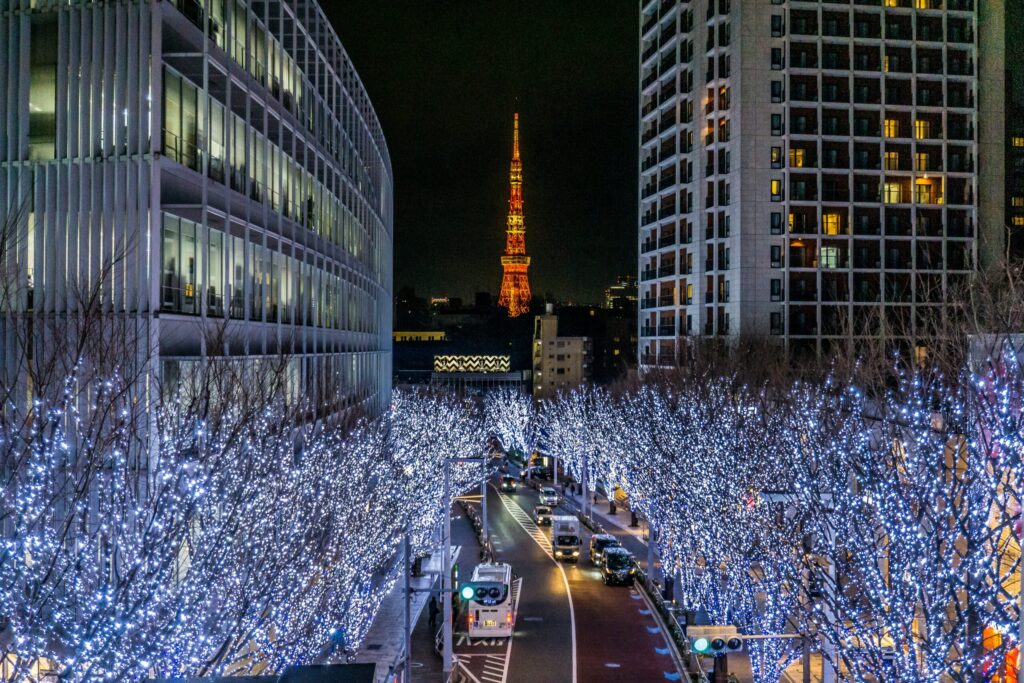
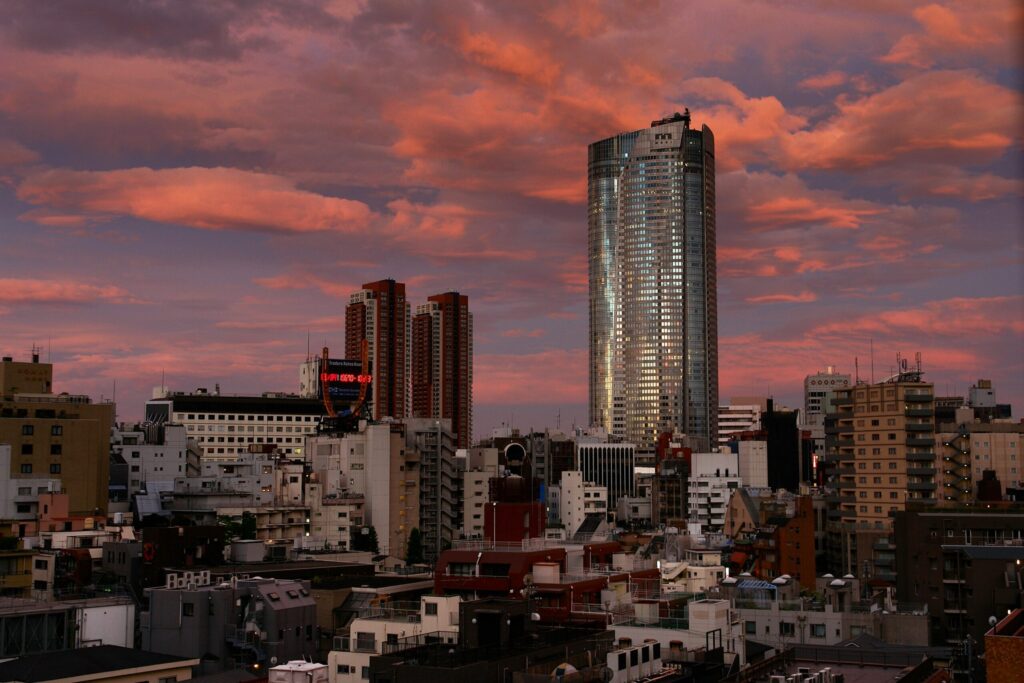
Roppongi is one of Tokyo’s most international neighborhoods, known for its mix of business, luxury residences, art museums, and nightlife. People from around the world live, work, and socialize here, giving the area a noticeably more international atmosphere than many other parts of the city.
While Roppongi is famous for its nightlife, it has much more to offer. Large-scale developments such as Roppongi Hills and Tokyo Midtown have transformed the area into a destination for shopping, dining, architecture, and contemporary art. During the day, it feels sophisticated and modern, while at night it becomes one of Tokyo’s liveliest entertainment districts.
Known for:
🌃 Nightlife • 🎨 Art • 🛍 Shopping • 🍽 Dining • 🌆 City Views
Azabu-Juban – Traditional Charm with Excellent Dining
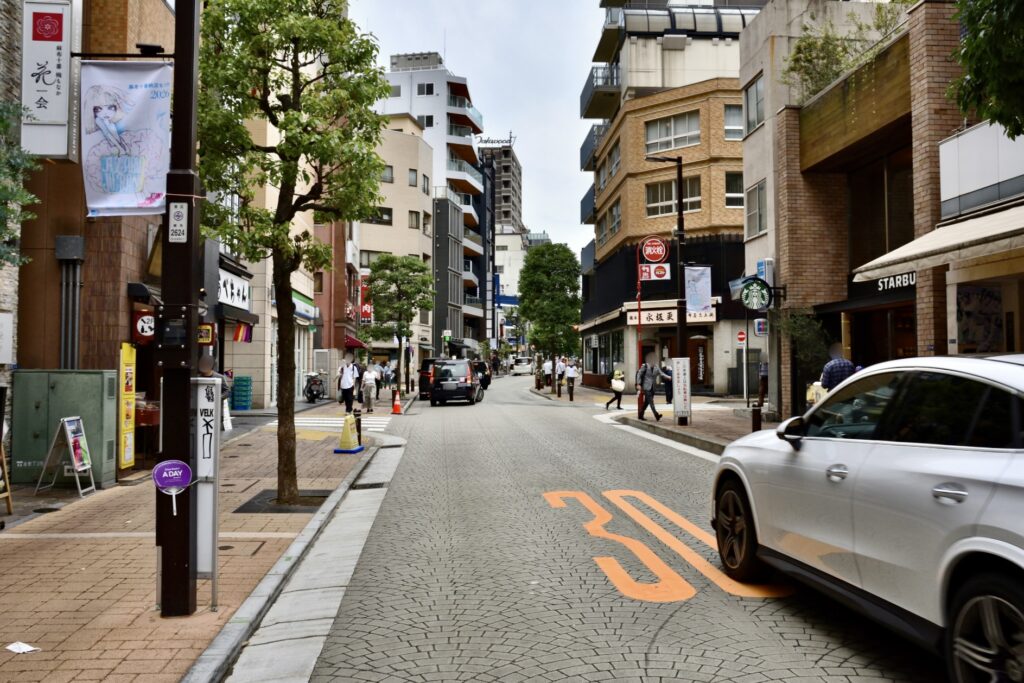
Located just a few minutes from Roppongi, Azabu-Juban feels like a completely different world. Traditional shops, long-established confectioneries, stylish cafés, artisan bakeries, and independent restaurants line its streets, creating a neighborhood that combines old Tokyo with a refined modern lifestyle.
The area is especially well known for its high-quality dining scene. Instead of large restaurant complexes, visitors will find carefully selected cafés, wine bars, and restaurants tucked between local shops and quiet residential streets. Popular with both Tokyo residents and the international community, Azabu-Juban is a neighborhood best explored slowly, where discovering a great place to eat is part of the experience.
Known for:
🍽 Dining • ☕ Cafés • 🥐 Bakeries • 🚶 Walking • 🏘 Local Atmosphere
Ebisu – One of Tokyo’s Best Dining Neighborhoods
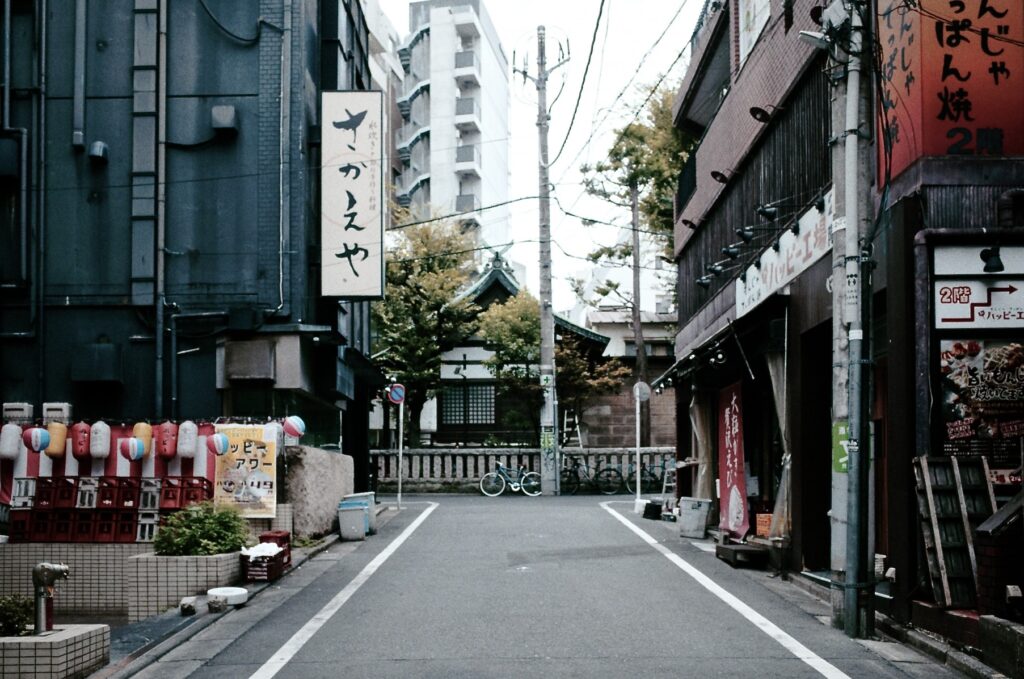
Ebisu is known for its relaxed atmosphere and excellent food scene. Stylish cafés, wine bars, bakeries, and restaurants fill the neighborhood, making it a favorite destination for both locals and visitors. Although it is only one station from Shibuya, Ebisu feels noticeably calmer and more residential.
Rather than attracting visitors with famous landmarks, Ebisu is appreciated for its comfortable streets, high-quality dining, and easygoing atmosphere. It is the kind of neighborhood where people come to spend an afternoon at a café or enjoy a leisurely evening with friends.
Known for:
🍽 Dining • ☕ Cafés • 🍷 Wine Bars • 🚶 Walking • 🏘 Local Atmosphere
Kanda – Tokyo’s Traditional Business District
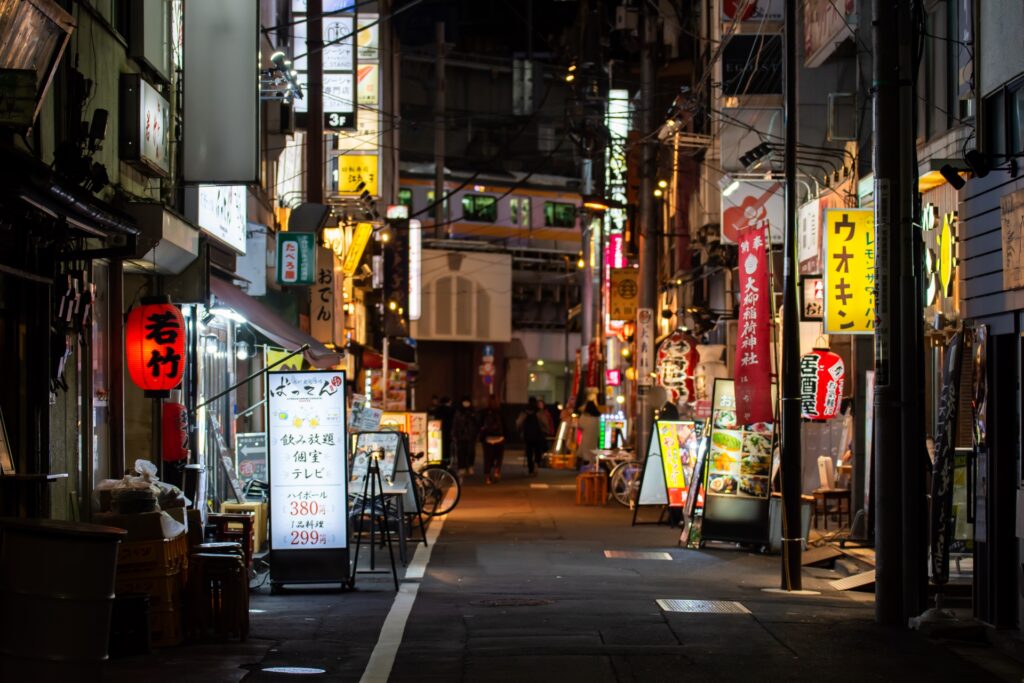
Kanda is one of Tokyo’s oldest commercial districts, where traditional businesses and modern office life continue to exist side by side. During the day, office workers fill the streets, while in the evening, countless small izakayas, family-run restaurants, and coffee shops come to life. Unlike Tokyo’s newer business districts, Kanda has retained much of its old-fashioned atmosphere, making it feel authentic and lived-in.
Rather than offering major sightseeing attractions, Kanda is a place to experience everyday Tokyo. Exploring its narrow streets reveals long-established shops, hidden eateries, and local businesses that have served the neighborhood for generations. It remains one of the city’s best places to experience Tokyo’s traditional business culture.
Known for:
🍶 Izakayas • 🍜 Dining • ☕ Cafés • 🏢 Business District • 🏘 Local Atmosphere
Ochanomizu – Tokyo’s Student and Music District
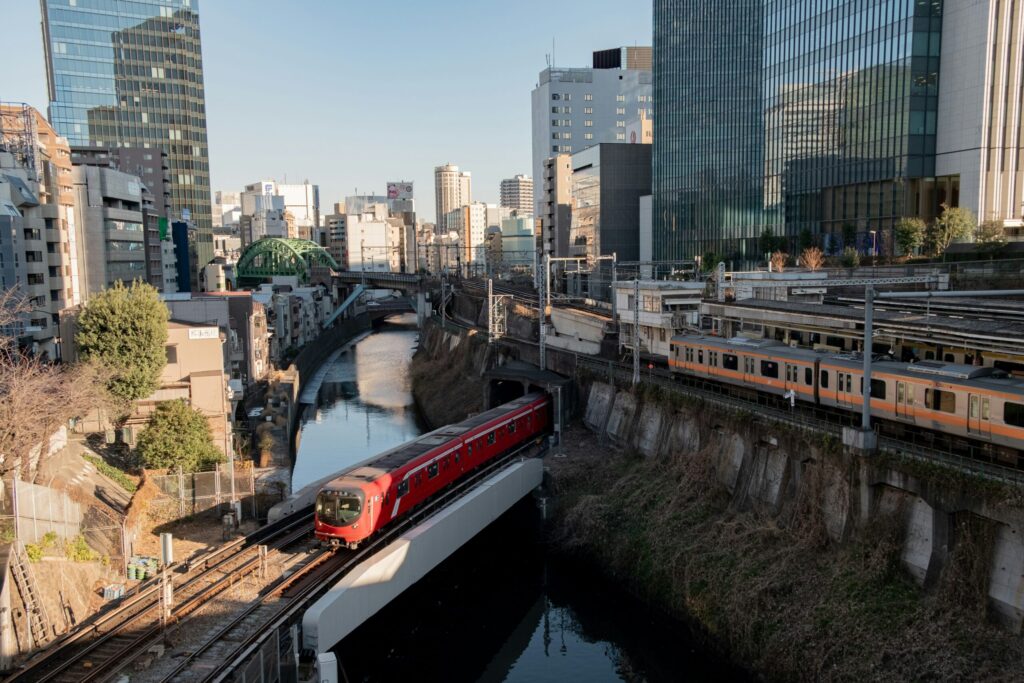
Ochanomizu is best known for its universities and its remarkable concentration of musical instrument stores. Students, musicians, and academics have shaped the neighborhood for decades, giving it an intellectual yet relaxed atmosphere unlike anywhere else in Tokyo.
Instead of major tourist attractions, visitors will find bookstores, cafés, music shops, and casual restaurants lining the streets. Whether you’re interested in guitars, pianos, or simply enjoying a quieter part of central Tokyo, Ochanomizu offers a refreshing change of pace from the city’s busier commercial districts.
Known for:
🎸 Music • 📚 Bookstores • ☕ Cafés • 🎓 Student Life • 🚶 Walking
Kagurazaka – Where Japanese and French Cultures Meet
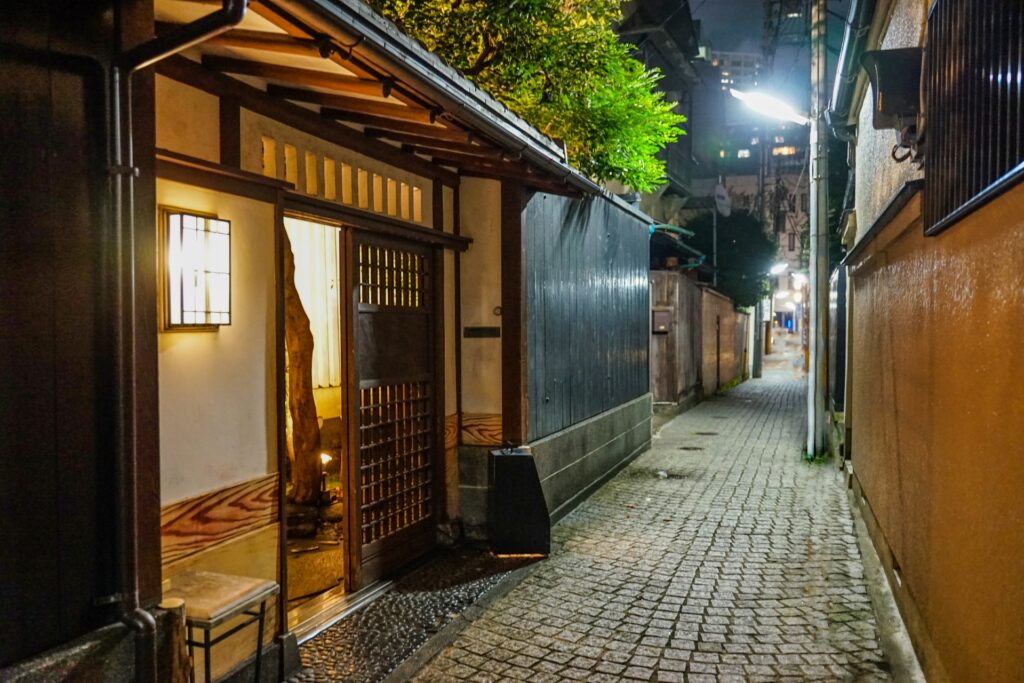
Kagurazaka is one of Tokyo’s most elegant neighborhoods, combining historic Japanese streets with a strong French influence. Hidden stone alleys, traditional restaurants, boutique shops, and stylish cafés create an atmosphere that feels both sophisticated and welcoming. The presence of French schools, bakeries, and bistros has earned the area the nickname “Tokyo’s Little Paris.”
Unlike many of Tokyo’s busier neighborhoods, Kagurazaka invites visitors to slow down and explore its narrow backstreets. Around almost every corner, you’ll find a small restaurant, café, or shop that feels like a hidden discovery, making it one of the city’s most charming places to wander.
Known for:
🍽 Dining • ☕ Cafés • 🥐 Bakeries • 🏮 Traditional Culture • 🚶 Walking
📍 West of the Yamanote Line
Kichijoji – Tokyo’s Perfect Balance of City and Nature
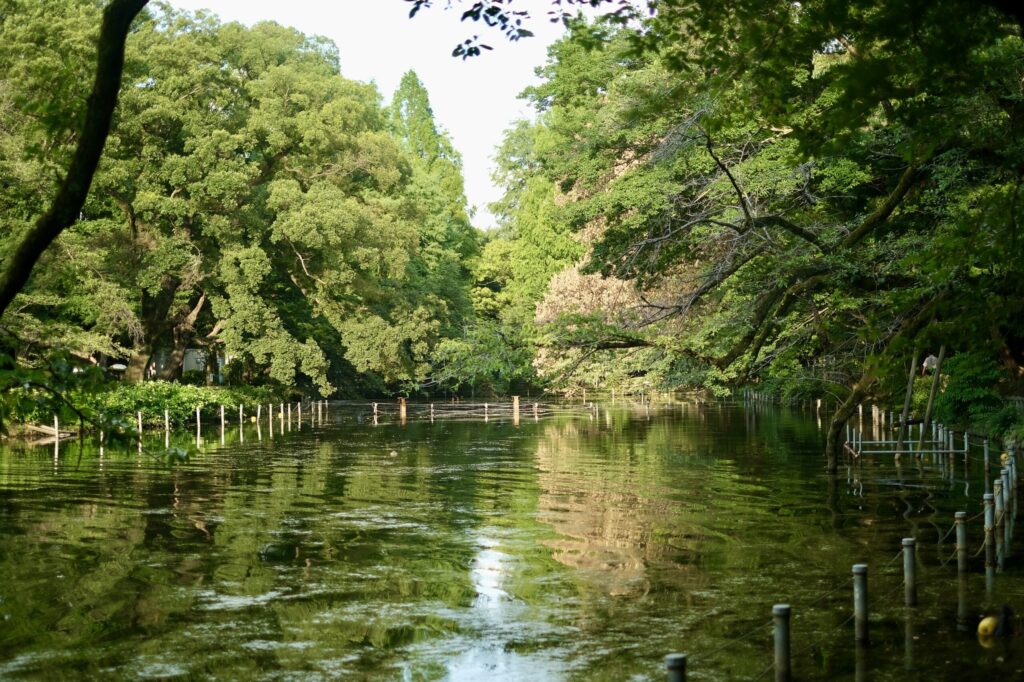
Kichijoji is consistently ranked as one of the most desirable places to live in Japan, and it’s easy to understand why. The neighborhood combines lively shopping streets, stylish cafés, department stores, independent boutiques, and excellent restaurants, all within a comfortable walking distance. Despite its popularity, it has retained a relaxed atmosphere that feels welcoming rather than overwhelming.
One of Kichijoji’s defining features is Inokashira Park, a large green space that offers a peaceful escape from the city. The balance between urban convenience and nature gives the neighborhood a character unlike anywhere else in Tokyo. It appeals equally to shoppers, food lovers, families, and anyone looking to experience a more relaxed side of the city.
Known for:
🌳 Parks • ☕ Cafés • 🛍 Shopping • 🍽 Dining • 🏘 Local Atmosphere
Koenji – Vintage Fashion and Independent Culture
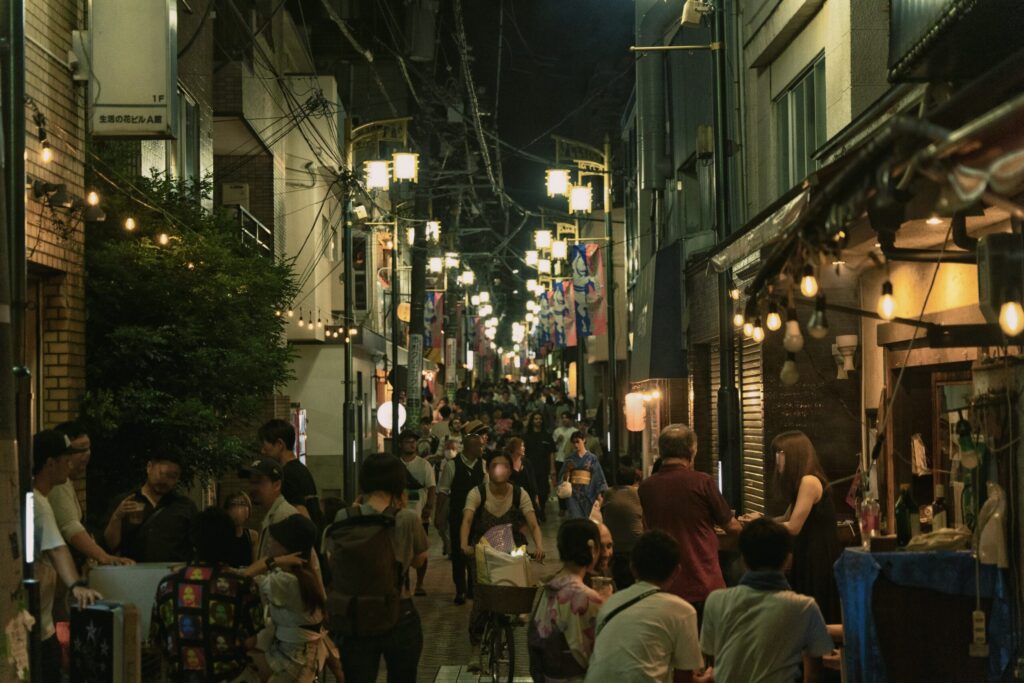
Koenji is one of Tokyo’s most creative neighborhoods, known for its vintage clothing stores, independent record shops, live music venues, and casual izakayas. Unlike the polished shopping districts of central Tokyo, Koenji embraces individuality, attracting artists, musicians, students, and people who enjoy a more alternative lifestyle.
The streets are made for wandering, with countless small shops, cafés, and bars tucked into narrow alleys. While it has become increasingly popular with international visitors, Koenji still feels unmistakably local. Its independent spirit and relaxed atmosphere make it one of the best places to experience Tokyo beyond the usual tourist route.
Known for:
👕 Vintage Shopping • 🎵 Live Music • ☕ Cafés • 🍺 Izakayas • 🏘 Local Atmosphere
Shimokitazawa – Tokyo’s Creative Neighborhood
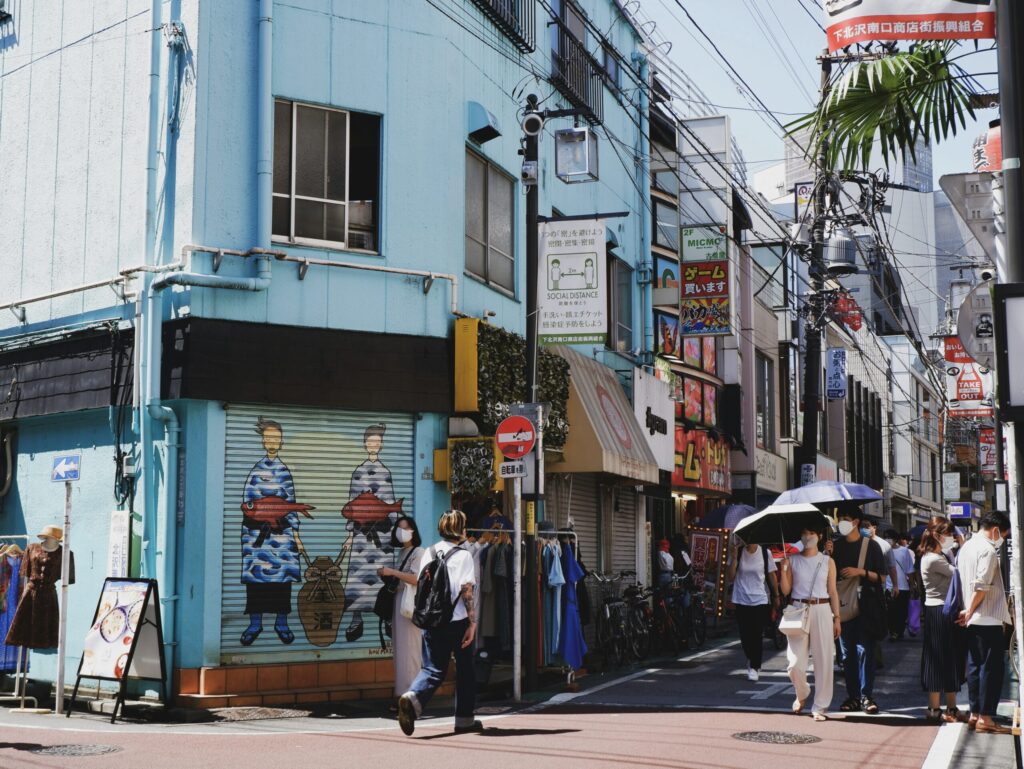
Shimokitazawa has built a reputation as one of Tokyo’s most creative and laid-back neighborhoods. Vintage fashion, independent bookstores, cafés, theaters, and live music venues fill its narrow streets, creating an atmosphere that encourages visitors to slow down and explore.
Rather than large department stores or famous landmarks, Shimokitazawa is defined by small independent businesses and local creativity. Every side street seems to reveal another café, boutique, or music venue, making wandering through the neighborhood one of the highlights of a visit. It offers a completely different side of Tokyo from the city’s larger commercial districts.
Known for:
👕 Vintage Shopping • ☕ Cafés • 🎵 Live Music • 🎭 Culture • 🚶 Walking
Nakano – A Paradise for Collectors
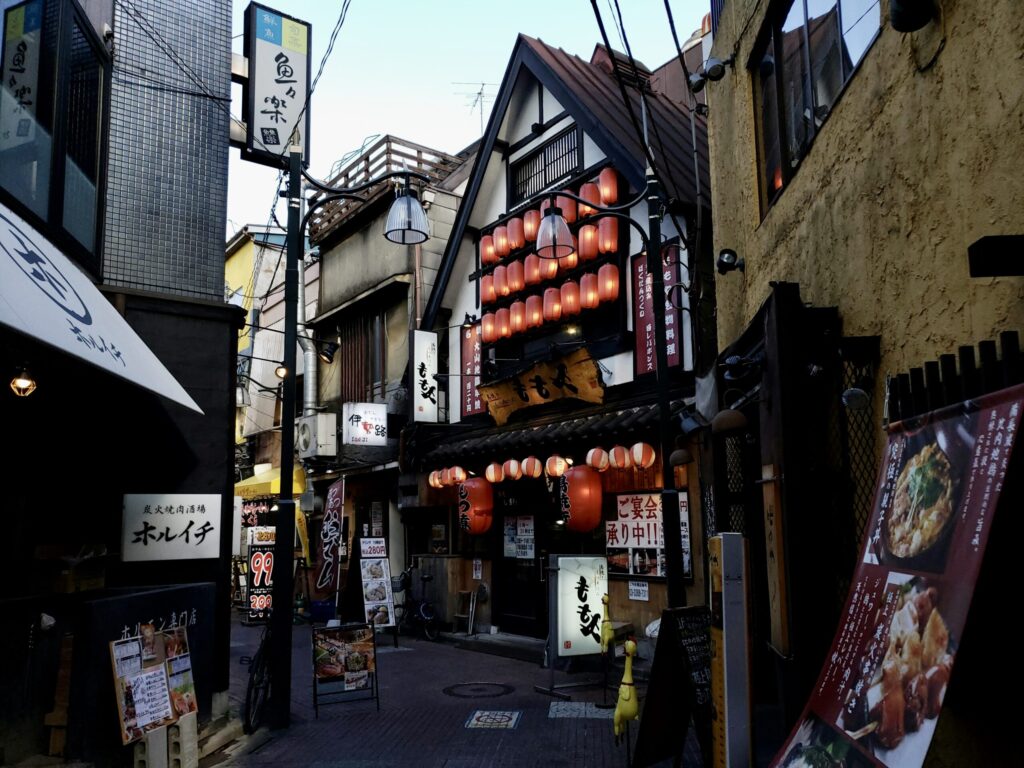
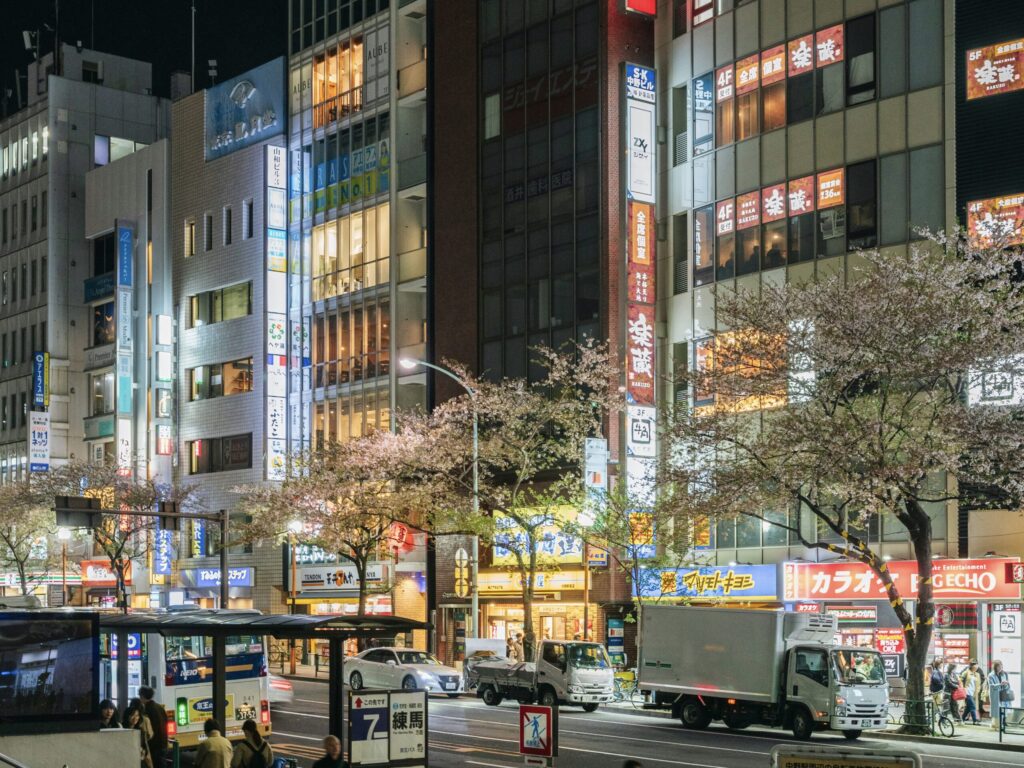
Nakano is best known for Nakano Broadway, one of Japan’s most famous destinations for anime, manga, vintage toys, and collectibles. While Akihabara focuses on the latest trends, Nakano has developed a reputation for rare items, nostalgic treasures, and specialty shops that attract dedicated collectors from around the world.
Beyond Nakano Broadway, the neighborhood feels surprisingly local. Covered shopping arcades, traditional restaurants, and residential streets create a welcoming atmosphere that contrasts with the busy commercial center. It is a place where modern pop culture and everyday Tokyo exist side by side.
Known for:
🎌 Anime • 🛍 Shopping • 🎲 Collectibles • 🍜 Dining • 🏘 Local Atmosphere
Daikanyama – Tokyo’s Most Sophisticated Lifestyle District
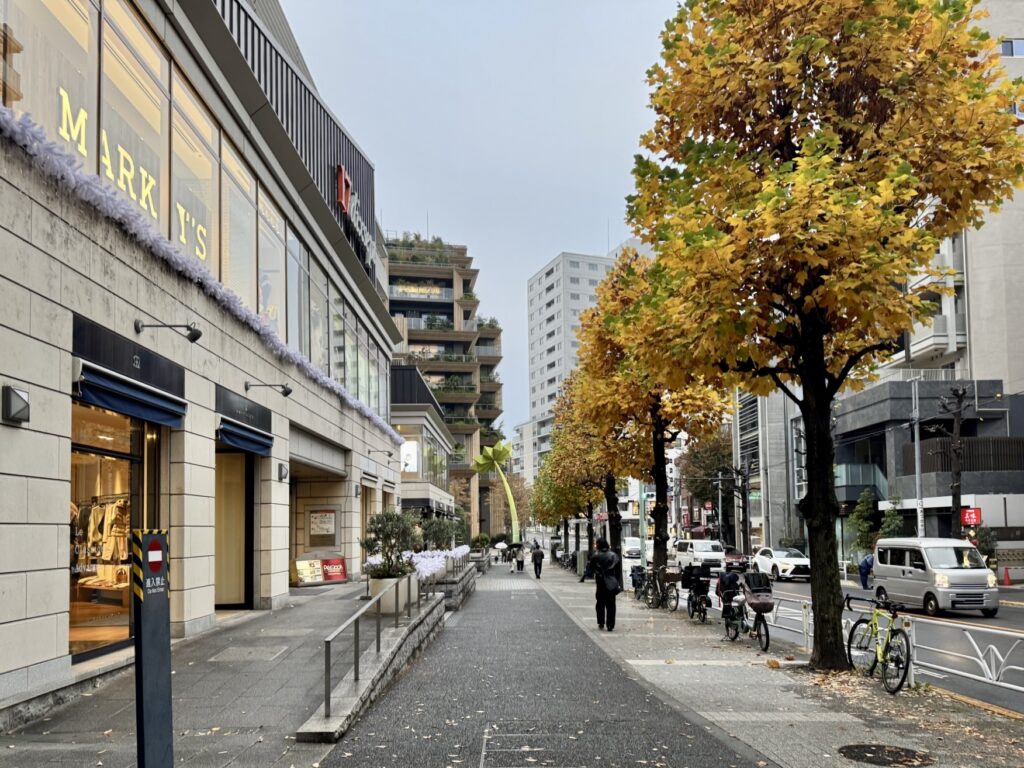
Daikanyama is often described as one of Tokyo’s most stylish neighborhoods. Quiet streets are lined with designer boutiques, beautifully designed cafés, bookstores, galleries, and lifestyle shops, creating an atmosphere that feels elegant without being extravagant.
Unlike the energy of nearby Shibuya, Daikanyama moves at a slower pace. Visitors come not to tick off famous sights, but to enjoy architecture, discover unique shops, and spend time in cafés. The neighborhood reflects a modern Tokyo lifestyle where good design, quality, and everyday life come together naturally.
Known for:
☕ Cafés • 🛍 Shopping • 📚 Bookstores • 🏛 Architecture • 🚶 Walking
Nakameguro – Riverside Cafés and Everyday Sophistication
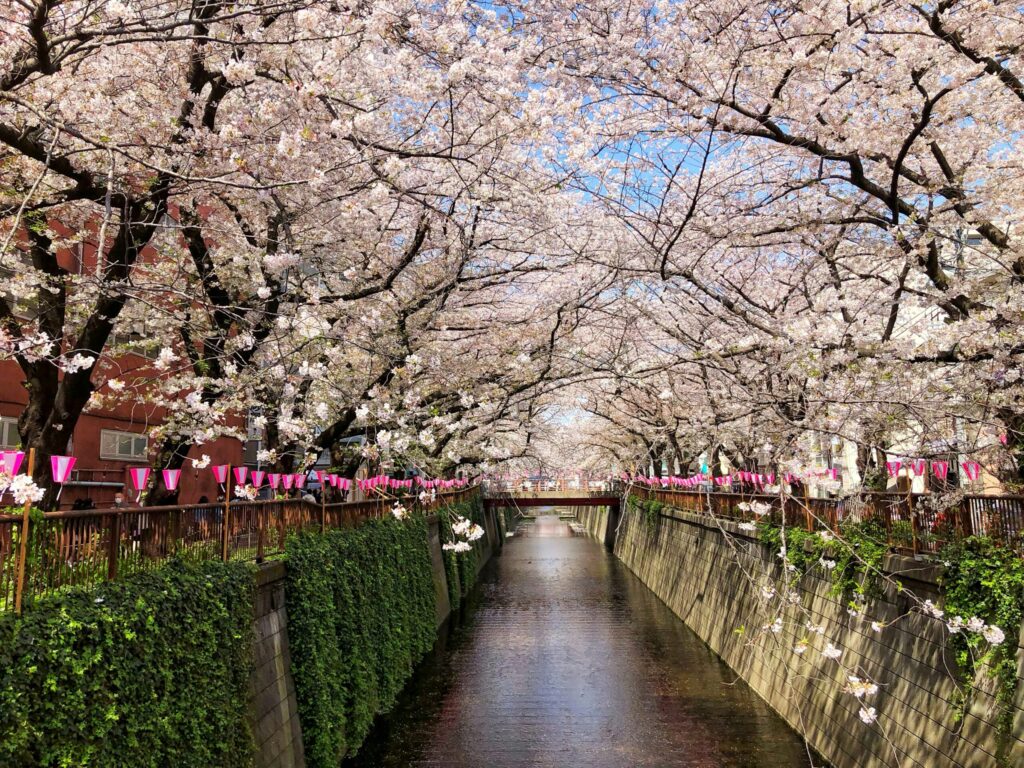
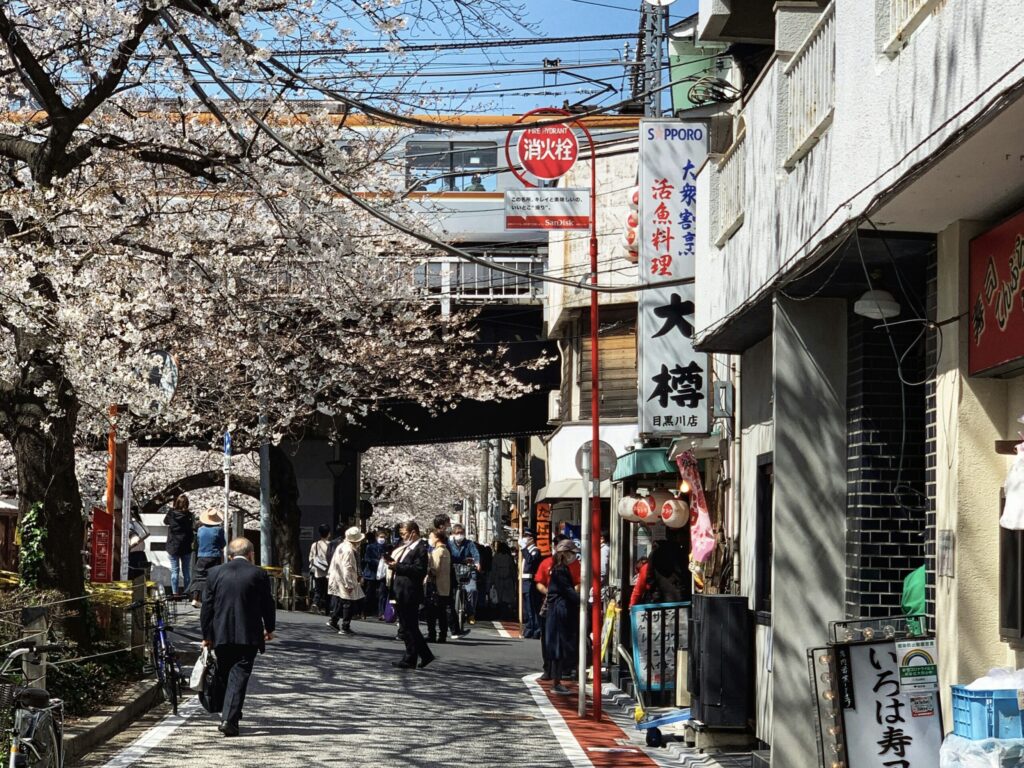
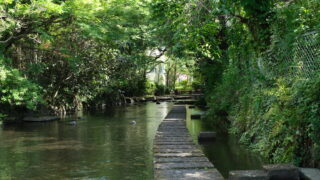
Nakameguro is one of Tokyo’s most fashionable residential neighborhoods, centered around the Meguro River. Independent cafés, bakeries, lifestyle stores, and boutique shops line the quiet streets, creating an atmosphere that feels relaxed rather than busy. During cherry blossom season, the riverside becomes one of Tokyo’s most popular destinations.
Even outside spring, Nakameguro is worth visiting simply for its atmosphere. Instead of famous landmarks, the neighborhood is known for leisurely walks, coffee culture, and discovering small independent businesses. It offers a refined yet approachable side of Tokyo that continues to attract both locals and visitors.
Known for:
☕ Cafés • 🌸 Cherry Blossoms • 🛍 Shopping • 🚶 Walking • 🏘 Local Atmosphere
Jiyugaoka – Relaxed Shopping and Café Culture
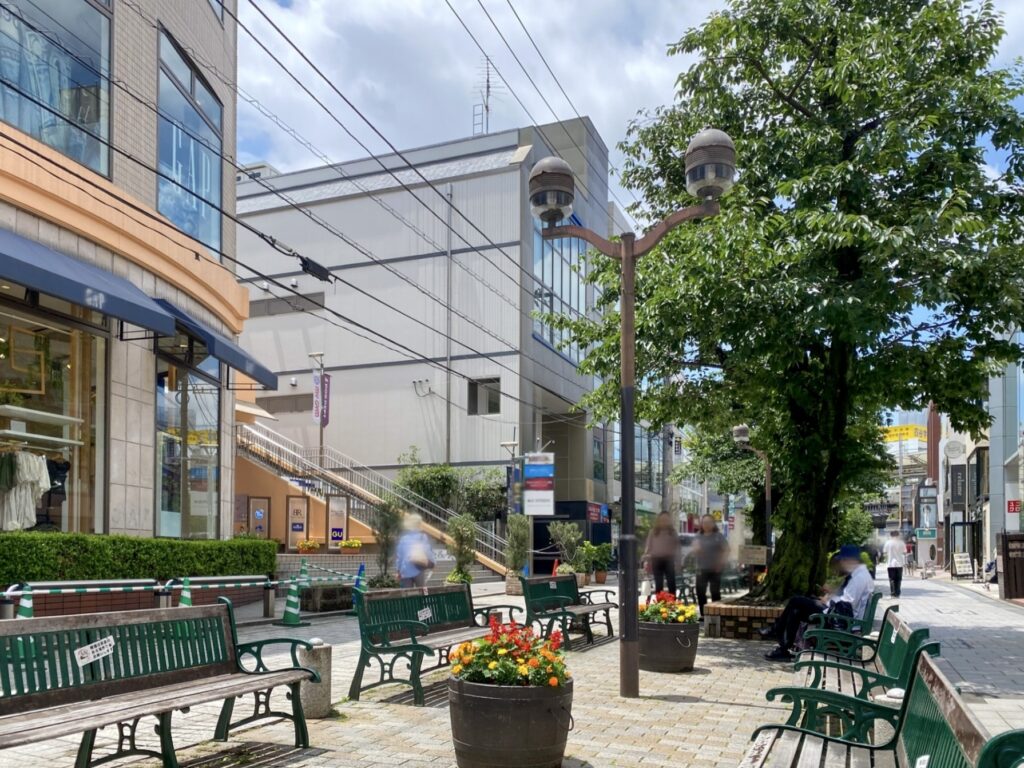
Jiyugaoka is known for its charming streets, elegant cafés, independent boutiques, and artisan bakeries. Unlike Tokyo’s larger shopping districts, the neighborhood has a slower pace, with low-rise buildings and tree-lined streets creating a relaxed atmosphere that encourages leisurely exploration.
Rather than famous landmarks, Jiyugaoka is appreciated for its everyday charm. Visitors often spend hours browsing small shops, enjoying desserts at cafés, or simply wandering through its pleasant streets. It offers a quieter, more residential side of Tokyo that remains popular with both locals and visitors.
Known for:
☕ Cafés • 🛍 Shopping • 🥐 Bakeries • 🚶 Walking • 🏘 Local Atmosphere
Futako-Tamagawa – Riverside Living and Modern Lifestyle
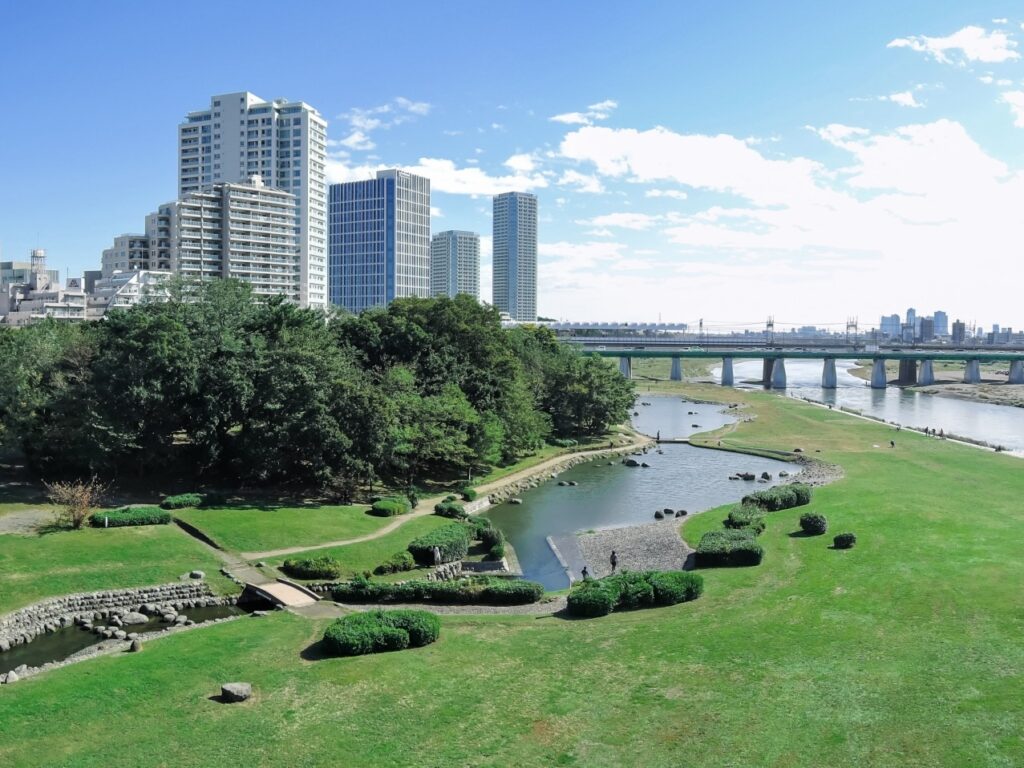
Located along the Tama River, Futako-Tamagawa is one of Tokyo’s most popular residential neighborhoods. The area combines spacious shopping complexes, riverside parks, stylish cafés, and modern apartment buildings, creating an atmosphere that feels open and relaxed compared with central Tokyo.
The Tama River is an important part of the neighborhood’s identity, attracting joggers, cyclists, families, and people enjoying outdoor activities throughout the year. Futako-Tamagawa is often seen as an example of Tokyo’s modern suburban lifestyle, where nature and urban convenience exist side by side.
Known for:
🌳 Parks • 🛍 Shopping • ☕ Cafés • 🌊 Riverside • 👨👩👧 Family-friendly
Sangenjaya – Everyday Tokyo at Its Best
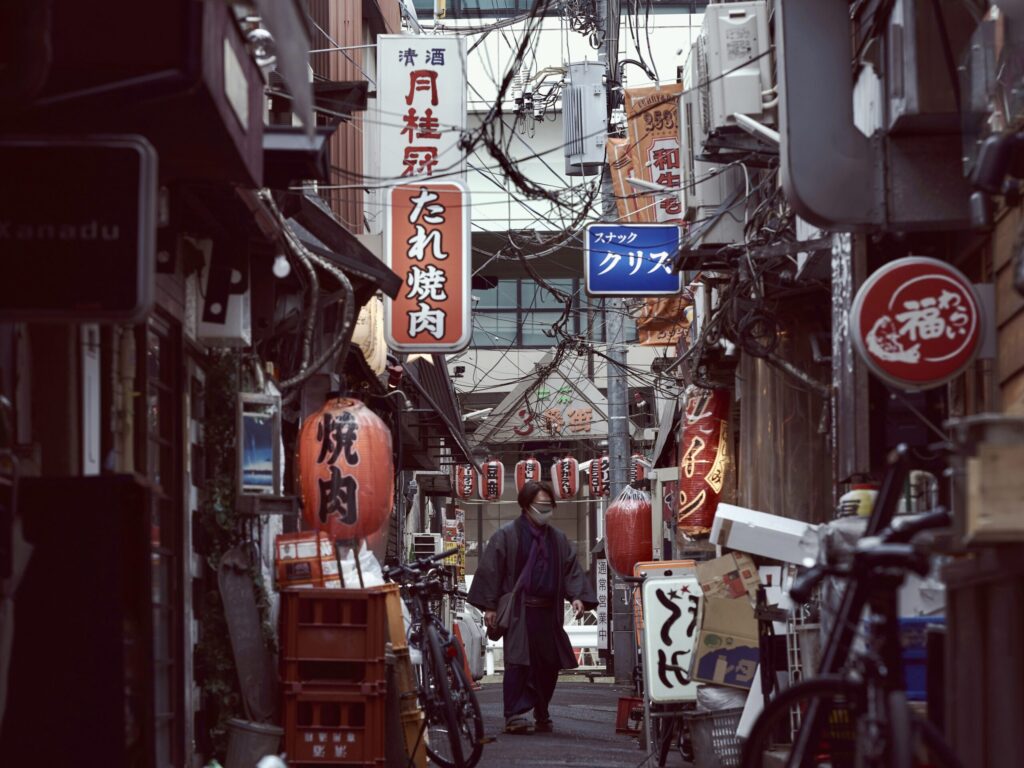
Just a few minutes from Shibuya, Sangenjaya has a completely different atmosphere. The neighborhood is filled with local restaurants, cozy cafés, lively izakayas, and traditional shopping streets, making it one of the best places to experience everyday life in Tokyo.
Unlike more tourist-oriented districts, Sangenjaya feels authentic and lived-in. During the day, residents shop and relax in local cafés, while evenings bring a lively atmosphere as restaurants and bars fill with people after work. It is a neighborhood where Tokyo’s daily life is on full display.
Known for:
🍺 Izakayas • ☕ Cafés • 🍜 Dining • 🚶 Walking • 🏘 Local Atmosphere
Yoyogi-Hachiman – A Quiet Escape Near Shibuya
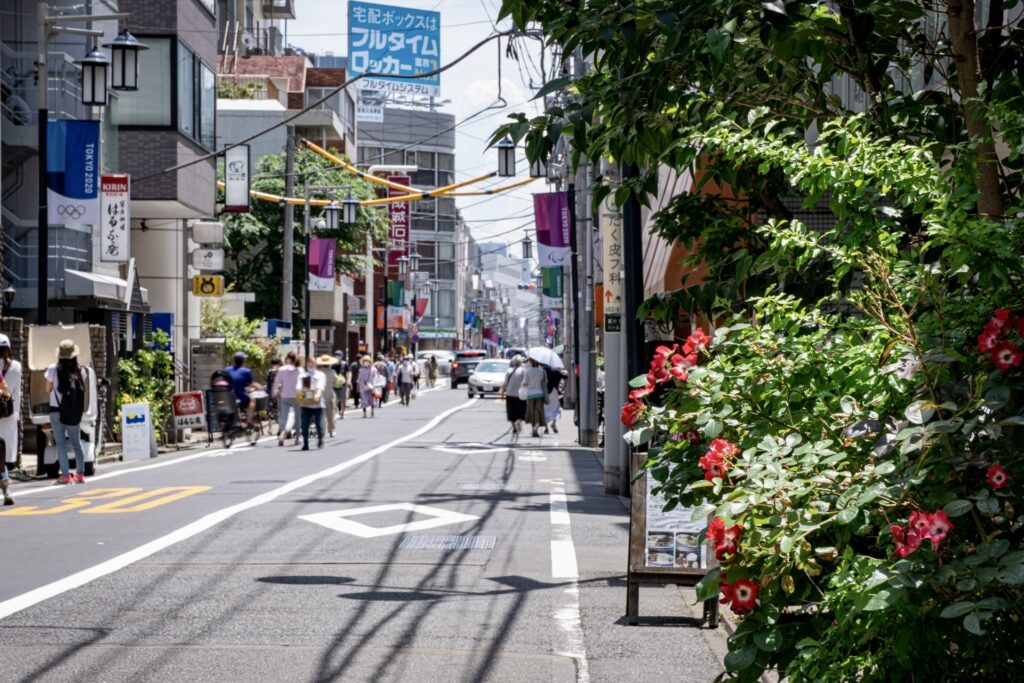
Despite being only a few minutes from Shibuya, Yoyogi-Hachiman feels remarkably peaceful. Small cafés, bakeries, local restaurants, and independent shops line its quiet streets, attracting residents who prefer a slower pace of life.
The neighborhood is also known for its close proximity to Yoyogi Park, making it popular with people who enjoy combining city life with green spaces. Its relaxed atmosphere makes it easy to forget that one of Tokyo’s busiest districts is just a short train ride away.
Known for:
☕ Cafés • 🌳 Parks • 🚶 Walking • 🥐 Bakeries • 🏘 Local Atmosphere
Yoyogi-Uehara – Tokyo’s Hidden Sophistication
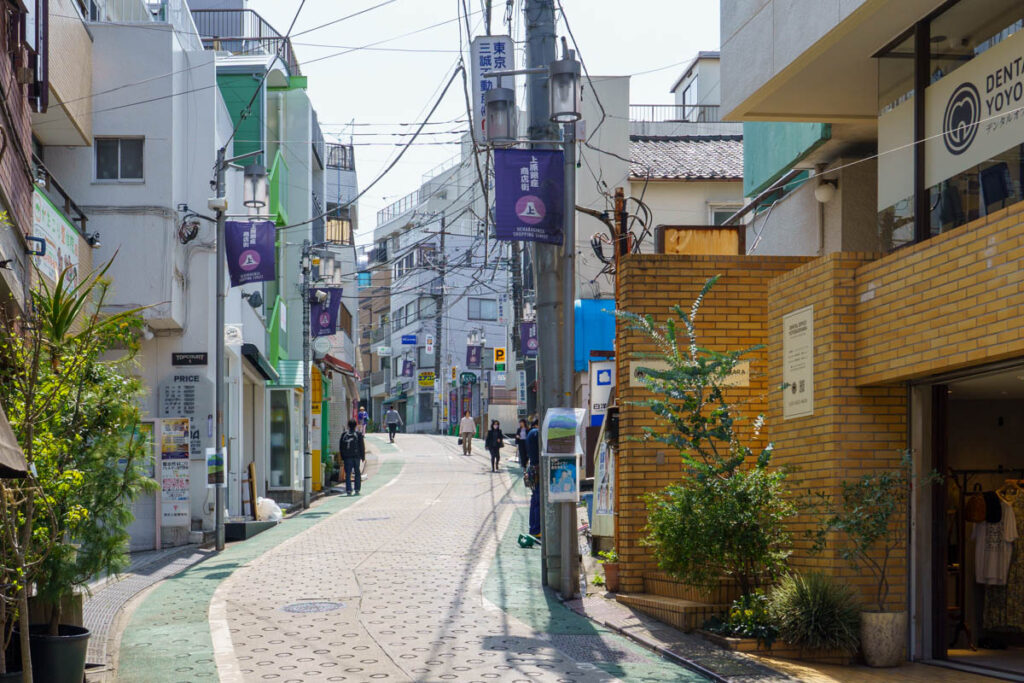
Yoyogi-Uehara is one of Tokyo’s most refined residential neighborhoods. Stylish cafés, bakeries, wine bars, and carefully curated boutiques are scattered throughout its quiet streets, creating an atmosphere that feels understated rather than flashy.
Unlike neighborhoods built around shopping or tourism, Yoyogi-Uehara is appreciated for its quality of life. Many visitors come simply to enjoy excellent food, discover independent businesses, and experience a quieter side of Tokyo that is rarely featured in guidebooks.
Known for:
☕ Cafés • 🍽 Dining • 🥐 Bakeries • 🚶 Walking • 🏘 Local Atmosphere
📍 East of the Yamanote Line
Asakusa – Where Traditional Tokyo Lives On
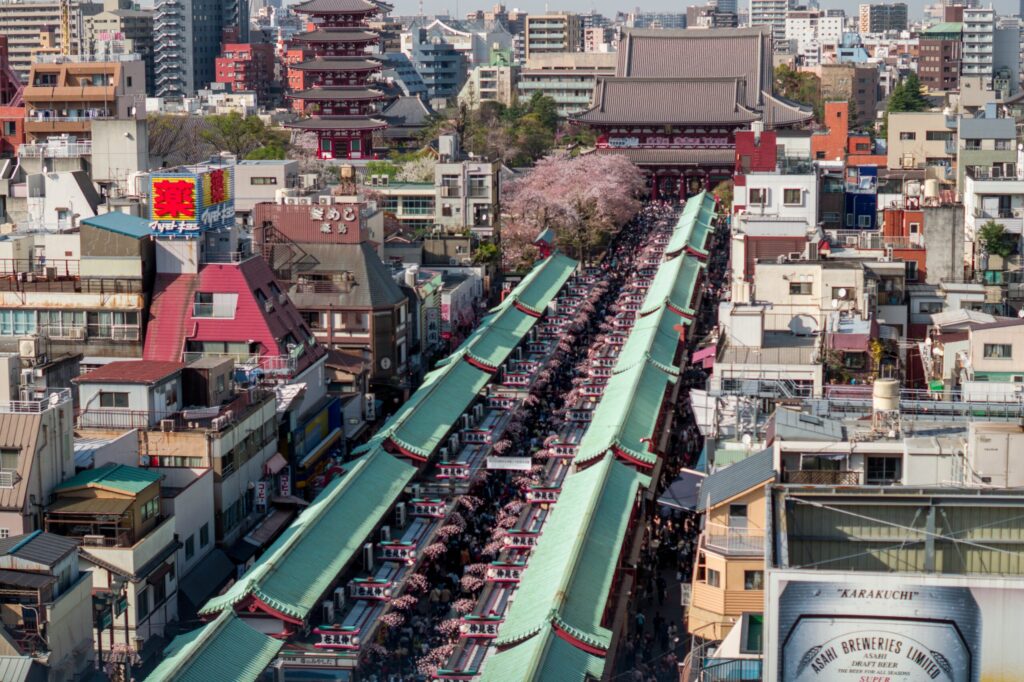
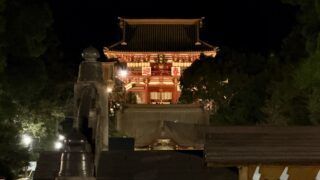
Asakusa is one of Tokyo’s oldest and most historic neighborhoods. Centered around Senso-ji Temple, the district preserves an atmosphere that reflects Tokyo’s past, with traditional shopping streets, long-established restaurants, seasonal festivals, and historic architecture.
Although it is one of Tokyo’s most visited destinations, Asakusa never feels like an open-air museum. Local residents, shop owners, worshippers, and visitors all share the same streets, creating a neighborhood where tradition remains part of everyday life.
Known for:
⛩ Sightseeing • 🏮 Traditional Culture • 🍜 Dining • 📷 Photography • 🎆 Festivals
Yanaka & Nezu – Old Tokyo at a Gentle Pace
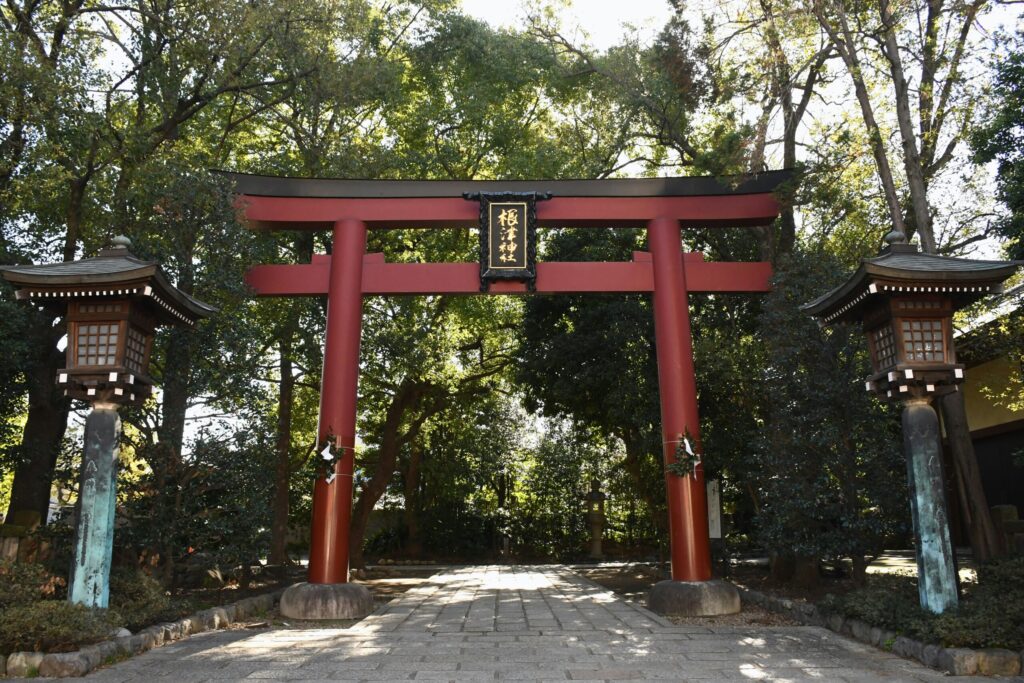
Yanaka and Nezu are neighboring districts that together offer one of the best glimpses of old Tokyo. Narrow residential streets, historic temples, small shrines, family-run shops, traditional cafés, and wooden houses create a peaceful atmosphere that has largely disappeared from many other parts of the city.
Unlike Asakusa, which attracts large numbers of tourists, Yanaka and Nezu remain primarily residential neighborhoods. The pace is slower, the streets are quieter, and daily life unfolds naturally around visitors. Rather than checking off famous attractions, this is a place to enjoy walking, discovering hidden cafés, and experiencing a more intimate side of Tokyo.
Known for:
🏮 Traditional Culture • ☕ Cafés • 🚶 Walking • 📷 Photography • 🏘 Local Atmosphere
Kuramae – Tokyo’s Craft and Coffee District
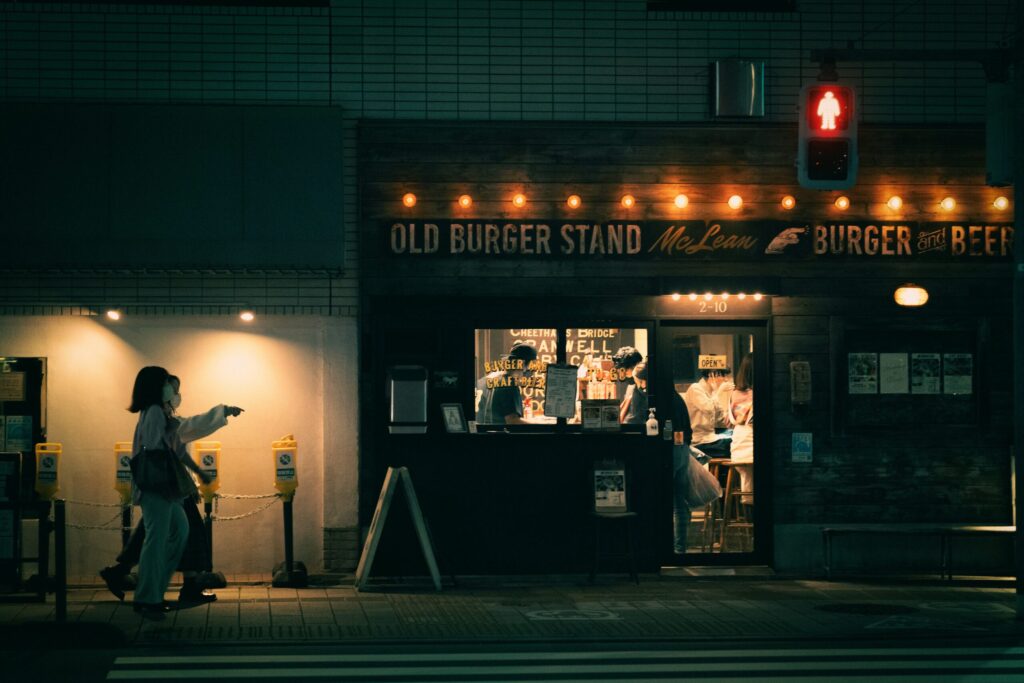
Once known mainly as a wholesale district, Kuramae has transformed into one of Tokyo’s most creative neighborhoods. Independent coffee roasters, artisan workshops, design stores, and small bakeries now occupy renovated warehouses and former factories, giving the area a distinctive character.
Kuramae doesn’t try to impress with major attractions. Instead, its appeal comes from discovering beautifully designed cafés, handcrafted products, and independent businesses that reflect modern Tokyo’s creative spirit. It is one of the city’s most enjoyable neighborhoods for slow exploration.
Known for:
☕ Cafés • 🎨 Crafts • 🛍 Shopping • 🚶 Walking • 🏘 Local Atmosphere
Kiyosumi-Shirakawa – Tokyo’s Coffee Capital
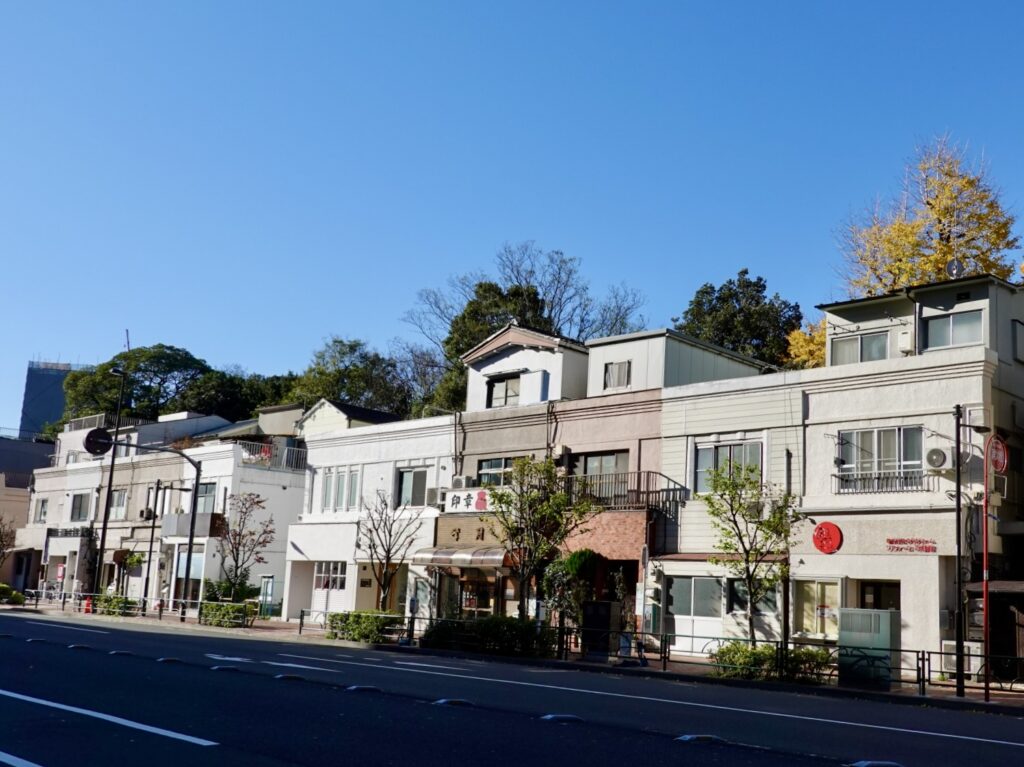
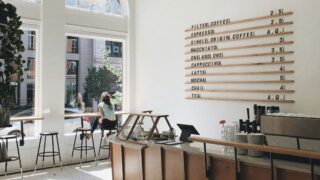
Kiyosumi-Shirakawa has earned a reputation as one of Tokyo’s best destinations for coffee lovers. Specialty coffee shops, converted warehouses, art spaces, and quiet residential streets give the neighborhood a relaxed atmosphere that feels very different from central Tokyo.
Although coffee is its biggest draw, Kiyosumi-Shirakawa is also a pleasant place simply to walk. Wide sidewalks, canals, parks, and a growing creative community make the neighborhood feel open, calm, and welcoming. It is an excellent place to slow down and experience a quieter side of the city.
Known for:
☕ Specialty Coffee • 🎨 Art • 🌳 Parks • 🚶 Walking • 🏘 Local Atmosphere
Tsukiji – More Than Just a Fish Market
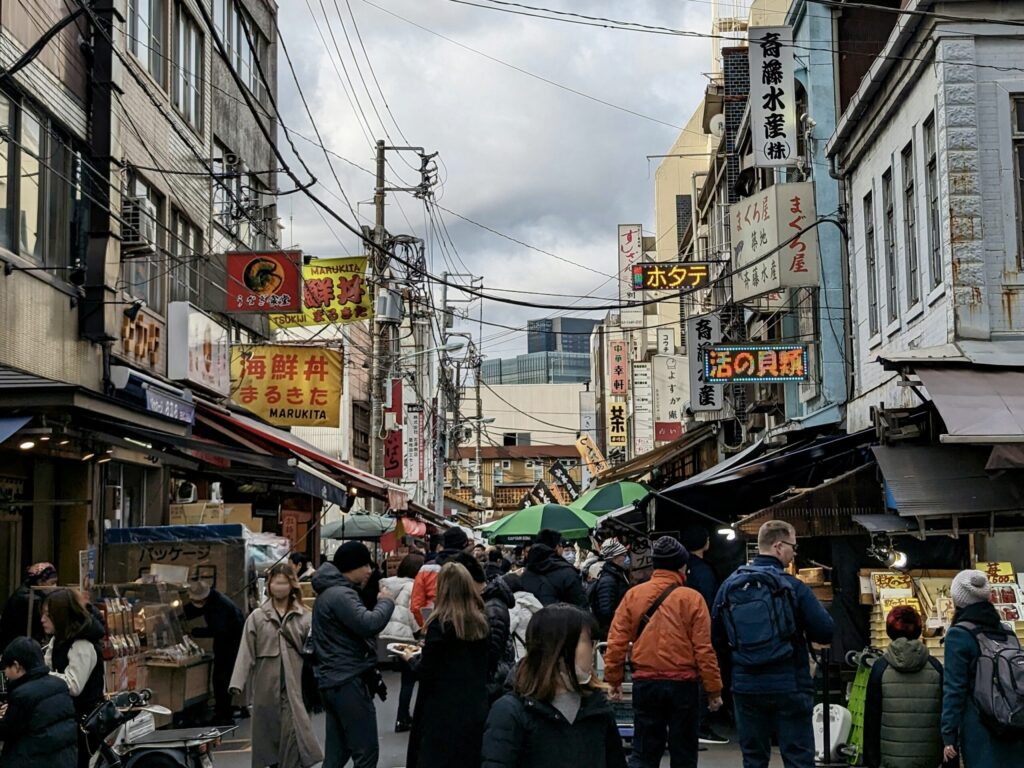
Although the famous wholesale fish market moved to Toyosu, Tsukiji remains one of Tokyo’s best destinations for fresh seafood and local food culture. The Outer Market is filled with sushi restaurants, seafood stalls, knife shops, and long-established specialty stores that continue to attract both locals and visitors.
Beyond its food, Tsukiji offers a glimpse into Tokyo’s traditional market culture. Walking through its narrow streets, you’ll experience the energy of a neighborhood where food has shaped everyday life for generations.
Known for:
🍣 Seafood • 🍜 Dining • 🛍 Local Markets • 🚶 Walking • 🏮 Traditional Culture
Toyosu – Tokyo’s Modern Waterfront
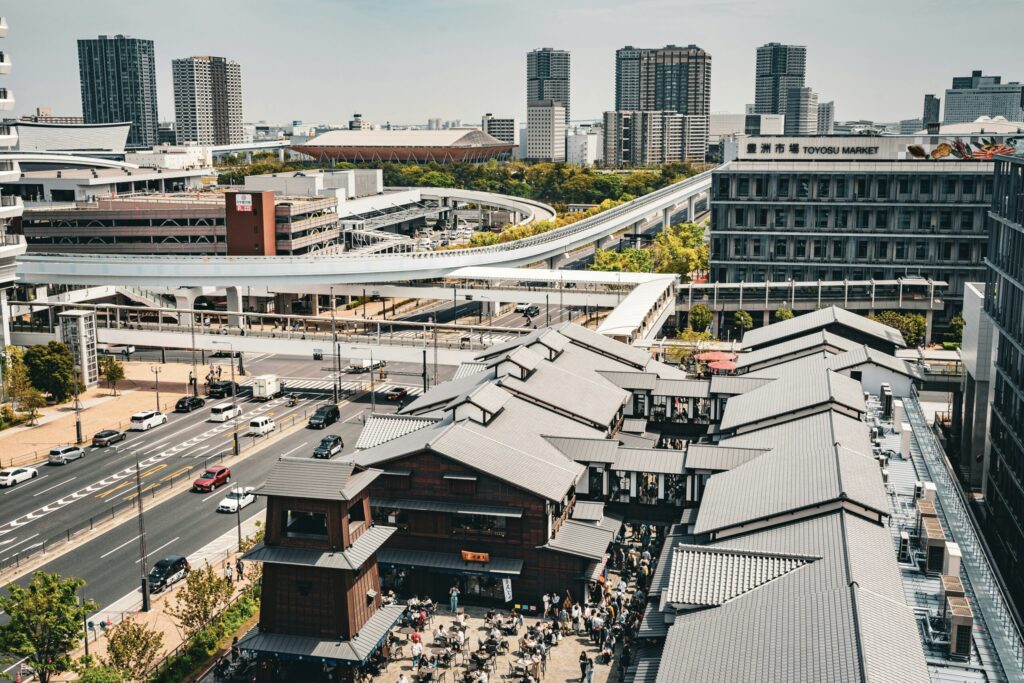
Toyosu represents one of Tokyo’s newest urban developments. Modern apartment towers, spacious parks, shopping complexes, and wide waterfront promenades give the area a completely different atmosphere from the city’s historic neighborhoods.
The Toyosu Market has become Japan’s largest wholesale seafood market, while nearby attractions such as teamLab Planets and the waterfront parks have made the district increasingly popular with visitors. Clean, spacious, and modern, Toyosu showcases a different vision of Tokyo’s future.
Known for:
🌊 Waterfront • 🍣 Seafood • 🛍 Shopping • 🌳 Parks • 👨👩👧 Family-friendly
Odaiba – Tokyo’s Futuristic Waterfront
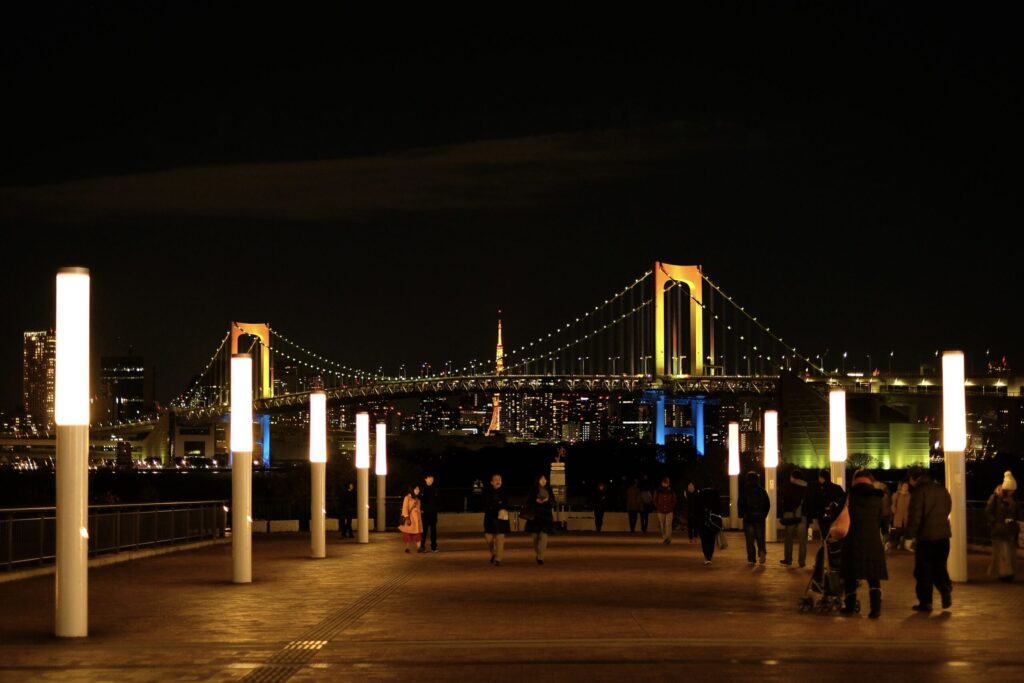
Odaiba is a modern waterfront district built on a man-made island in Tokyo Bay. Wide promenades, shopping malls, entertainment complexes, museums, and open spaces give the area a spacious atmosphere that feels very different from the rest of the city. It is one of the best places to enjoy Tokyo’s skyline and bay views.
Unlike Tokyo’s older neighborhoods, Odaiba is designed for leisure and recreation. Visitors can spend an entire day shopping, relaxing by the waterfront, visiting attractions, or simply enjoying the open scenery. Its futuristic architecture and family-friendly atmosphere make it especially popular with first-time visitors.
Known for:
🌊 Waterfront • 🎡 Entertainment • 🛍 Shopping • 🌆 City Views • 👨👩👧 Family-friendly
Kinshicho – Convenient, Lively, and Surprisingly Local
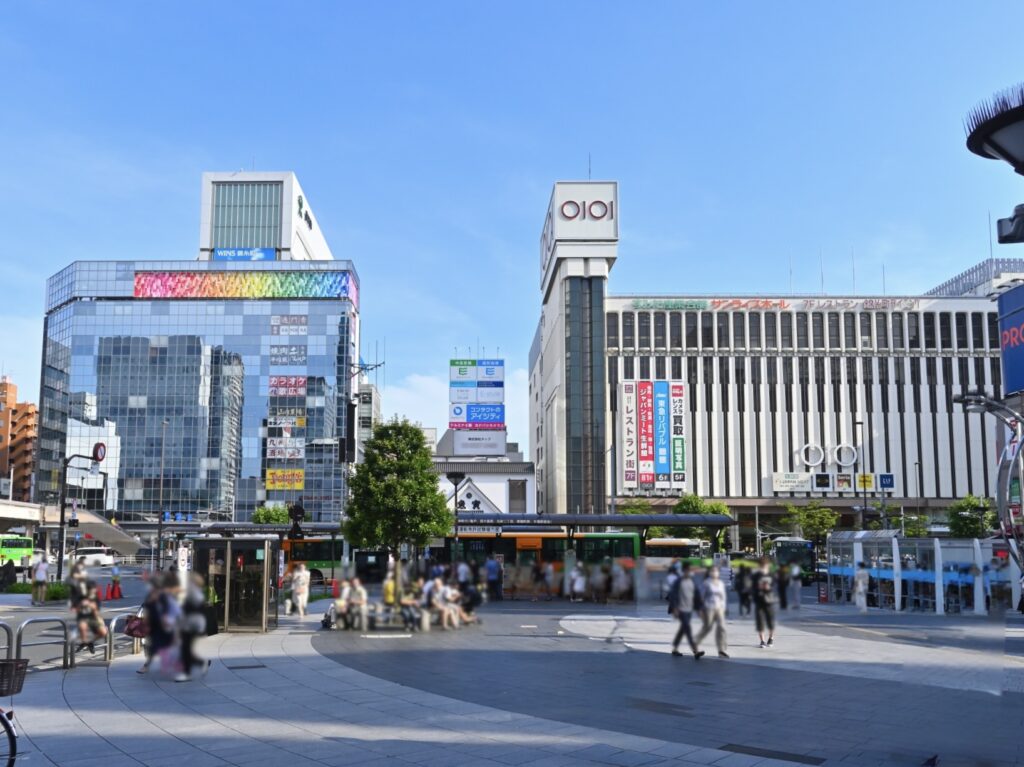
Kinshicho is often overlooked by international visitors, yet it is one of Tokyo’s most convenient neighborhoods to stay in. Located just east of the city center, it offers excellent transportation, a wide range of hotels, shopping malls, restaurants, bars, and entertainment, often at lower prices than more famous areas like Shinjuku or Shibuya.
Despite its convenience, Kinshicho still feels like a neighborhood where local people live, work, and socialize. Whether you’re looking for casual izakayas, department stores, or a relaxed evening after sightseeing, it offers a practical and authentic base for exploring Tokyo.
Known for:
🏨 Hotels • 🍺 Izakayas • 🛍 Shopping • 🚆 Transportation • 🏘 Local Atmosphere
Sugamo – Tokyo’s Traditional Shopping Street
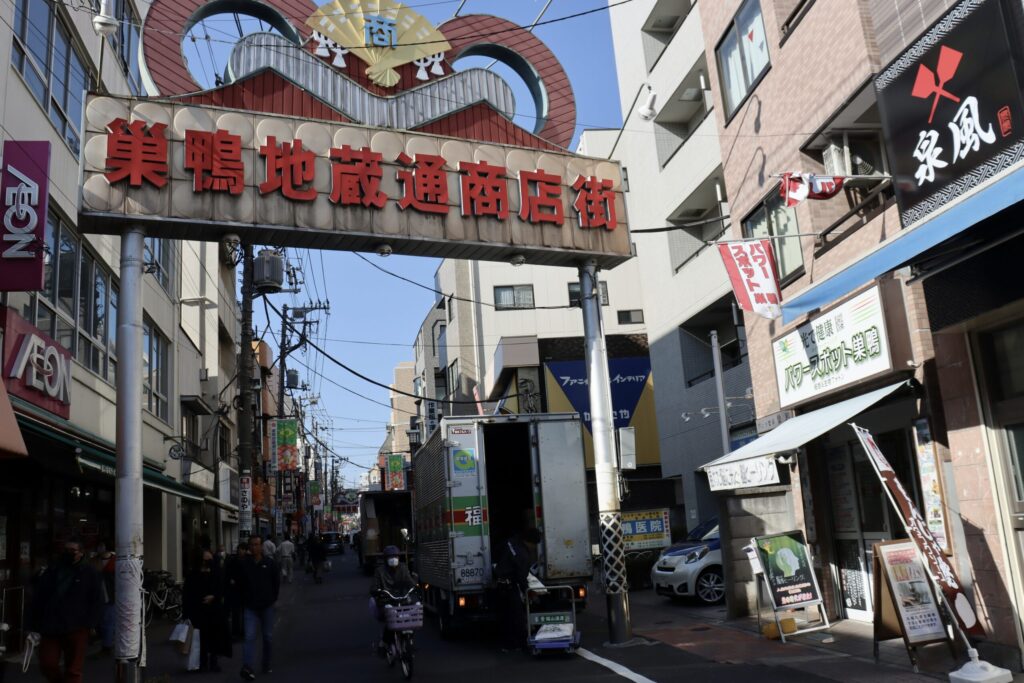
Sugamo is affectionately known as “Grandma’s Harajuku”, thanks to its traditional shopping street that has long been popular with older Tokyo residents. The neighborhood is filled with local shops, sweet stores, temples, and casual restaurants, creating a warm and welcoming atmosphere.
Although its nickname attracts attention, Sugamo appeals to visitors of all ages. It offers a slower pace of life and a chance to experience a traditional shopping street that continues to serve its local community rather than tourists.
Known for:
🏮 Traditional Culture • 🛍 Shopping • 🍡 Local Food • 🚶 Walking • 🏘 Local Atmosphere
Which Tokyo Neighborhood Is Right for You?
Every neighborhood in Tokyo offers a different experience, and that’s what makes the city so fascinating. Some areas are famous around the world, while others are loved mainly by locals. There is no single “best” neighborhood—only the one that best matches your interests and travel style.
If you’re still unsure where to visit, here are a few suggestions.
🌆 If it’s your first time in Tokyo…
Shinjuku, Shibuya, Asakusa, and Ueno offer a great introduction to the city, combining iconic sights, shopping, dining, and excellent transportation.
☕ If you love cafés and relaxing walks…
Head to Nakameguro, Kuramae, Kiyosumi-Shirakawa, Jiyugaoka, or Daikanyama for stylish cafés and a slower pace of life.
👕 If you enjoy vintage shopping and local culture…
Explore Koenji and Shimokitazawa, where independent shops, live music, and creative communities define the neighborhood.
🍣 If food is your priority…
Visit Ebisu, Azabu-Juban, Tsukiji, or Kagurazaka, where you’ll find everything from casual local restaurants to some of Tokyo’s finest dining.
🏮 If you want to experience traditional Tokyo…
Asakusa is the most famous choice, while Yanaka & Nezu offer a quieter and more residential atmosphere.
🌳 If you’re looking for somewhere peaceful…
Spend time in Kichijoji, Futako-Tamagawa, or Yoyogi-Hachiman, where parks, cafés, and local life create a more relaxed experience.
Which Neighborhood Should You Visit?
| Neighborhood | Best Atmosphere | Ideal For | Known for |
|---|---|---|---|
| Tokyo Station / Marunouchi | Elegant, modern | First-time visitors | 🚄 Transportation • 🏛 Architecture • ☕ Cafés |
| Ginza | Sophisticated | Luxury shopping, fine dining | 🛍 Shopping • ✨ Luxury • 🍽 Dining |
| Shinjuku | Energetic | First-time visitors, nightlife | 🏙 City Life • 🌃 Nightlife • 🛍 Shopping |
| Shibuya | Trendy | Fashion, young travelers | 👗 Fashion • ☕ Cafés • 🌃 Nightlife |
| Harajuku | Creative | Fashion lovers, teenagers | 👗 Fashion • 🌳 Parks • ☕ Cafés |
| Omotesando | Stylish | Architecture, cafés | 🏛 Architecture • ☕ Cafés • 🛍 Shopping |
| Ueno | Cultural | Museums, families | 🏛 Museums • 🌳 Parks • 🏘 Local Atmosphere |
| Akihabara | Unique | Anime, gaming, electronics | 🎌 Anime • 🎮 Pop Culture • 📱 Electronics |
| Ikebukuro | Lively | Shopping, entertainment | 🛍 Shopping • 🎮 Pop Culture • 🍜 Dining |
| Roppongi | International | Nightlife, art | 🌃 Nightlife • 🎨 Art • 🌆 City Views |
| Azabu-Juban | Relaxed | Fine dining, cafés | 🍽 Dining • ☕ Cafés • 🏘 Local Atmosphere |
| Ebisu | Relaxed | Food lovers | 🍽 Dining • 🍷 Wine Bars • ☕ Cafés |
| Kanda | Traditional | Izakayas, local Tokyo | 🍶 Izakayas • 🏢 Business District |
| Ochanomizu | Academic | Music, bookstores | 🎸 Music • 📚 Bookstores • 🎓 Student Life |
| Kagurazaka | Elegant | Walking, hidden restaurants | 🍽 Dining • 🥐 Bakeries • 🏮 Traditional Culture |
| Kichijoji | Balanced | Everyone | 🌳 Parks • ☕ Cafés • 🛍 Shopping |
| Koenji | Alternative | Vintage shopping, music | 👕 Vintage • 🎵 Live Music |
| Shimokitazawa | Creative | Independent culture | 👕 Vintage • 🎭 Culture • ☕ Cafés |
| Nakano | Unique | Collectors, anime fans | 🎌 Anime • 🎲 Collectibles |
| Daikanyama | Sophisticated | Design, cafés | ☕ Cafés • 🏛 Architecture |
| Nakameguro | Relaxed | Cherry blossoms, cafés | 🌸 Cherry Blossoms • ☕ Cafés |
| Jiyugaoka | Charming | Shopping, desserts | 🛍 Shopping • ☕ Cafés • 🥐 Bakeries |
| Futako-Tamagawa | Spacious | Families, Shopping, riverside walks | 🌳 Parks • 🌊 Riverside |
| Sangenjaya | Local | Everyday Tokyo | 🍺 Izakayas • 🍜 Dining |
| Yoyogi-Hachiman | Quiet | Slow travel | ☕ Cafés • 🌳 Parks |
| Yoyogi-Uehara | Refined | Fine dining, cafés | 🍽 Dining • 🥐 Bakeries |
| Asakusa | Historic | Traditional Tokyo | ⛩ Sightseeing • 🏮 Traditional Culture |
| Yanaka & Nezu | Nostalgic | Walking, photography | 🏮 Traditional Culture • 📷 Photography |
| Kuramae | Creative | Crafts, coffee | 🎨 Crafts • ☕ Cafés |
| Kiyosumi-Shirakawa | Relaxed | Coffee lovers | ☕ Specialty Coffee • 🎨 Art |
| Tsukiji | Foodie | Seafood, markets | 🍣 Seafood • 🛍 Local Markets |
| Toyosu | Modern | Seafood, Families, waterfront | 🌊 Waterfront • 🌳 Parks |
| Kinshicho | Convenient | Staying in Tokyo | 🏨 Hotels • 🚆 Transportation • 🍺 Izakayas |
| Sugamo | Traditional | Local shopping streets | 🏮 Traditional Culture • 🍡 Local Food |
Final Thoughts
Tokyo isn’t a city with just one personality—it’s a collection of unique neighborhoods, each offering a completely different experience. From the historic streets of Asakusa to the creative cafés of Kuramae, from the energy of Shibuya to the relaxed atmosphere of Kichijoji, every area reveals a different side of the city.
If this guide helps you discover a neighborhood you hadn’t considered before, then it has achieved its purpose. Don’t be afraid to step beyond the most famous tourist spots—you might find your favorite part of Tokyo where you least expect it.
Enjoy exploring, and have an amazing time in Tokyo!